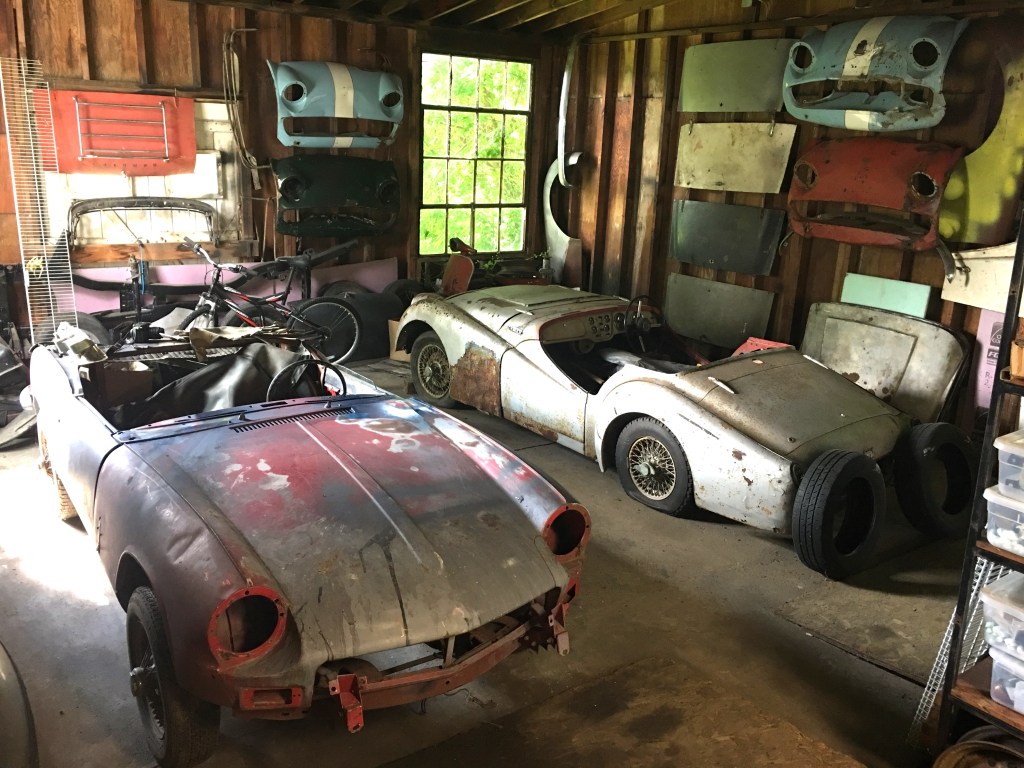
Setting up a well-equipped gearhead garage so you can restore that old Franklin, Plymouth or Saab two-stroke in comfort is the single most important phase of your car’s restoration. Without a properly outfitted shop you will not be able to rebuild your old car, truck or motorcycle in either a timely, correct and safe manner.
For more than two decades I performed restoration work in a variety of very tight one- and two-car garages without the use of any major hand or power tools; one garage didn’t even have electricity. But in defiance to my very limited space and lack of much-needed specialized tools, I was still able to complete my restorations, although not as quick or as good if I had a proper working garage.
Years ago, I built an 800-sq.ft. garage by my lonesome self and outfitted it with all the tools and equipment needed to restore old cars. Living in Vermont at the time, I also installed a ceiling mounted gas-fired heater. I was then able to perform far more work and do specialized tasks that I was never able to do before. More importantly, having a well-equipped garage makes restoring old cars a far more enjoyable experience; in fact, too enjoyable at times as in several instances I have found myself working in the garage way too late at night when instead I should have been in bed snoozing.
The most important item needed is electricity. If your garage is not already wired, run as much power as possible as you can never have too many amps. Hire a licensed electrician and have them install a panel box with several dedicated circuits, each with their own circuit breaker. These dedicated circuits should include one for the air compressor, a MIG or TIG welder and one for a gas heater. Keep in mind that you want the compressor and welder circuits wired for 220 amps because they will use less amperage than 110 circuits, and they will work more efficiently. Most importantly, consult with your licensed electrician for what type of power is required.
Continuing with the electrical system, you can never have too many outlets. I installed outlets at both of my workstations, on both sides of the garage doors, and two on the wall opposite the workstations in order to cut down on the use of dangerous extension cords. One of the most useful electrical items I installed was a ceiling fan right in the middle of the garage; in the winter this fan helps distribute the heat throughout the space more efficiently while making it cooler when the temperature outside rises.
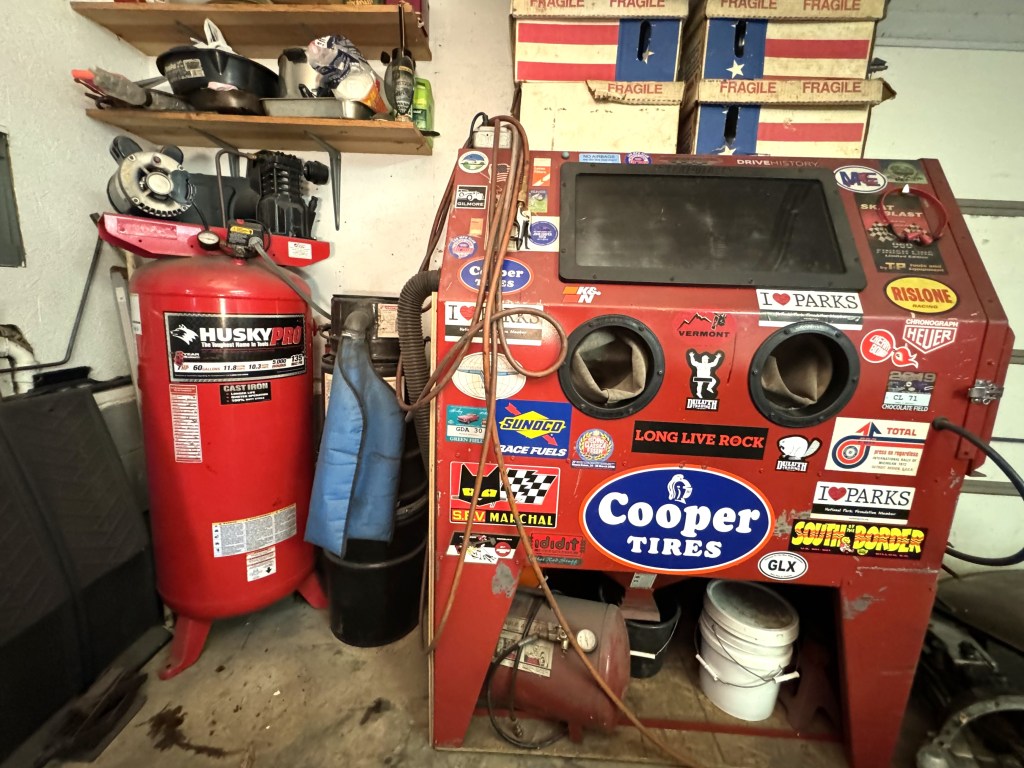
When it comes to air compressors don’t settle for a small 20-gallon unit. Spend another $200 and go for a larger compressor that will allow you to use pneumatic tools and spray guns at their fullest capacity. For $420 at my local Home Depot I bought one of those red 60-gallon standup compressors with twin cylinders and a 7hp motor. It works great, allowing me to use my bead blaster and spray equipment continuously. Lowes, Tractor Supply and TP Tools & Equipment in Canfield, Ohio, all have similar units for around the same price. You’ll also need a quality air filter and pressure regulator to ensure that no moisture gets into the hose and ruins your paintwork. And use smaller 1/4-inch or 3/8-inch diameter hoses, not the larger ½-inch hose; this will give you more air pressure at the gun. As for a spray gun, again, don’t waste money on one of those cheap $25 spray guns you see being sold by swap meet tool vendors. If you want a quality paint finish, you’ll need a quality gun, so buy a DeVilbiss, Binks or Sata.
A large vise is a necessity. I use one with six-inch jaws so it will provide all the clamping area I will mostly need; and don’t forget to buy a set of those hard plastic jaw covers to prevent marring metal parts. Above this particular workbench is a metal cabinet where I keep all my spray lubricants, oils and grease containers so they are within reach when I’m assembling my engines. A four-foot-long LED fixture hangs above to provide suitable lighting. Remember, good lighting reduces eye strain, which, in turn, increases the quality of your work.
Grinding and polishing are two tasks that sometimes go hand in hand. So, I bolted my bench grinder at the end of one workstation and located immediately to the right of it my buffer that I mounted on a steel pedestal. It’s convenient to locate certain tools such as these next to each other as it aids in your productivity.
I keep a portable 30-inch square fan on hand which I place in the window whenever I’m painting, sanding or grinding. You’ll be surprised as to how much overspray and sanding dust a window fan removes from the air, thus making your space safer to work in.
Most importantly, a 10-pound fire extinguisher is a must. In fact, two at both ends of the garage would offer even better protection. Also, have at the ready a bucket of sand and a large jug of water for those times when a fire extinguisher would be overkill. I also keep a metal garbage pail – with its lid on – inside my garage to stash dirty rags and have a fire-proof steel cabinet where I store all my paints, thinners, aerosol spray cans and every other flammable product; they’re expensive, about $500, but well worth the peace of mind. When it comes to protecting your garage against fire, you can never be too cautious.

And don’t forget to protect yourself as well. Safety goggles and safety glasses, ear protection, several pairs of work gloves, dust masks and an OSHA-approved dual cartridge mask for painting are essential and must be used. Oh, and don’t forget to install a sturdy lock on the doors and outdoor motion detector lighting. Most importantly, you need a comfortable chair to relax in so you can rest your achy muscles or just to sit back and contemplate your next more, and also a decent stereo so you can listen to your favorite tunes while you work. Making a fun and enjoyable environment that is safe to work in is what having your own garage should be all about. The projects that you will be able to build and the cars you’ll be able to restore will make your life so much more rewarding.