A Century of Technical Innovation and Aesthetic Grace
By Jmi Donnelly
Photographs Courtesy of the Lincoln & Continental Owners Club

Excellence. In the English language, it’s generally a noun. It’s also a word that stands alone in the language, declaring unshakable superiority. It’s a concept that stands alone. The very best, when nothing less will suffice. Top notch. It’s the only word that’s applicable when describing the century’s worth of automobiles produced by Lincoln.
Lincoln is the end result of collaborations between strong-willed visionaries, including one whose footprint was so broad that it straddled the creation of three fabled American automobiles. It started out as a freestanding luxury automobile, with independent ownership, but it didn’t stay that way. Lincoln handed the Ford Motor Company a level of prestige that it never enjoyed previously, as it cranked out lookalike Model Ts by the millions, and a halo of exclusivity that it still enjoys today. From the viewpoint of history, with few exceptions, Lincolns have projected conservative elegance. And while it requires a measure of perspective to fully appreciate, you can establish a relatively straight line, even if it’s sometimes not boldly drawn, between Lincoln’s styling advances and some of the larger Ford galaxy’s most dazzling stars. From the day the first Lincoln Model L appeared in 1920, the marque has always been about understated distinction. It’s no accident that Lincoln is arguably the most prolific chassis used during the great custom-body era of American coachbuilding.


1922 Four-Passenger Phaeton (left) and the 1924 Phaeton.
First, the basics. No discussion of Lincoln can commence without first recognizing its founder. Henry Martyn Leland is one of the great figures in American industrial history. Born in Barton, Vermont, Leland was both a patriot and a perfectionist, having grown up in the early machine-tool industry and later arrived at the Springfield Armory in Massachusetts, where he practiced with the close tolerances required in gunsmithing during the Civil War. His expertise in creating advanced tooling brought Leland to Detroit, where he provided the initial engines and transmissions for Ransom Eli Olds’ first automobiles. In 1902, while liquidating the assets of the Detroit Motor Company, which Henry Ford helped to found, Leland suggested that the firm be repurposed to build luxury cars. The resulting automobile was Cadillac.
Leland became a millionaire after Cadillac was absorbed into the newborn General Motors by Billy Durant. The brand’s pioneering electric starter, electric lighting and L-head V-8 engine were all Leland initiatives. Like some of Durant’s other subordinates, Leland left GM in a huff when Durant, a pacifist, refused to build materiel for World War I. Leland founded a new firm, the Lincoln Motor Company, in 1917 – only not to build cars, not at first. Leland started building the Liberty aero engine under license and named the company after his hero, Abraham Lincoln, for whom Leland had cast his first presidential ballot in 1864.
The good guys won, the troops came home and the Lelands, including his son, Wilfred, abruptly found themselves with a lot of excess factory capacity. In hindsight, it’s clear that Henry Leland likely intended to keep building luxury cars even before he walked out on Durant and Cadillac. The first running prototypes of what became the Lincoln Model L arrived in 1919. It’s generally believed – inaccurately – that the first Lincoln V-8 was based loosely on the V-12 aero engine. What’s more relevant is that the Lincoln V-8 was both potent at 90 horsepower and uncommonly compact, due to its 60-degree layout and its fork-and-blade rotating assembly, under which two connecting rods pivoted on a single bearing. The Model L was engineered more than it was styled, and its looks were decidedly less than radical. It also ran about $1,000 more than an equivalent Cadillac, when a new Model T’s price was measured in three digits. Its impressive engineering made the Lincoln a canvas for the nascent American coachbuilding industry, including companies such as Brunn and Judkins, almost from the start. Yet Leland’s soundly conceptualized, uncompromising Lincoln struggled in the marketplace. Which brings us to another misconception, that Lincoln’s visual lines simply left buyers bored.
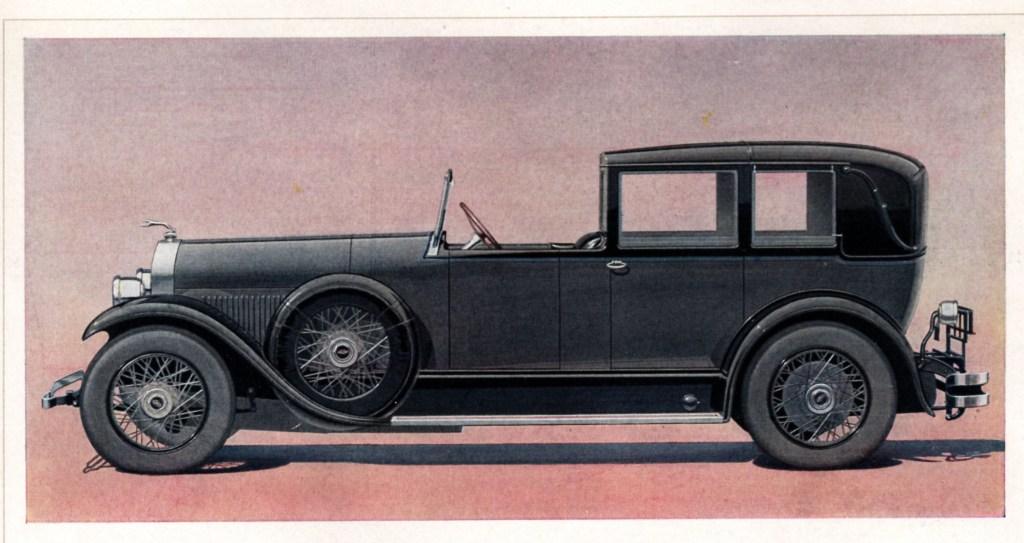
“The real reason Lincoln found themselves in financial difficulties was that there was a postwar recession going on that claimed a number of car companies,” said David Schultz of Massillon, Ohio, former president of the Classic Car Club of America, chairman of the Lincoln Motor Car Foundation and president of the Lincoln Owners Club. “The early 1920s was a bloodbath for independent automakers. Locomobile went under and was purchased by Durant. There was a whole slew of companies that had difficulty, and at Lincoln, it didn’t have anything to do with their styling or engineering.”
Regardless, the Lelands still went broke, and in 1922, Ford bought it through a bankruptcy sale. It provided Henry Ford with a high-profit halo car that he’d previously lacked. And it provided his only child, Edsel, with an opportunity to shine. If Henry Leland is the father of Lincoln, then Edsel Ford is rightfully its patron saint. The Lelands, father and son, didn’t last: The two Henrys clashed heatedly almost at once, and the Lelands left Lincoln by 1922. Effectively, the brand then became Edsel Ford’s. In 1922, Edsel was 29 years old and president of Ford, at least in title. He was highly intelligent, urbane and worldly. His studied efforts to capitalize on Lincoln’s lofty bearing through exceptional styling bore results that reverberated through Ford’s product lineup long after his premature death in 1943.
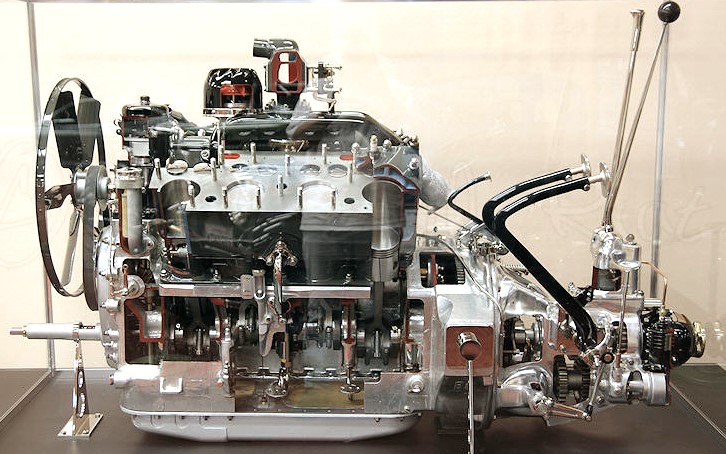
ultra close tolerances – a hallmark of Henry Leland’s obsession with perfection.
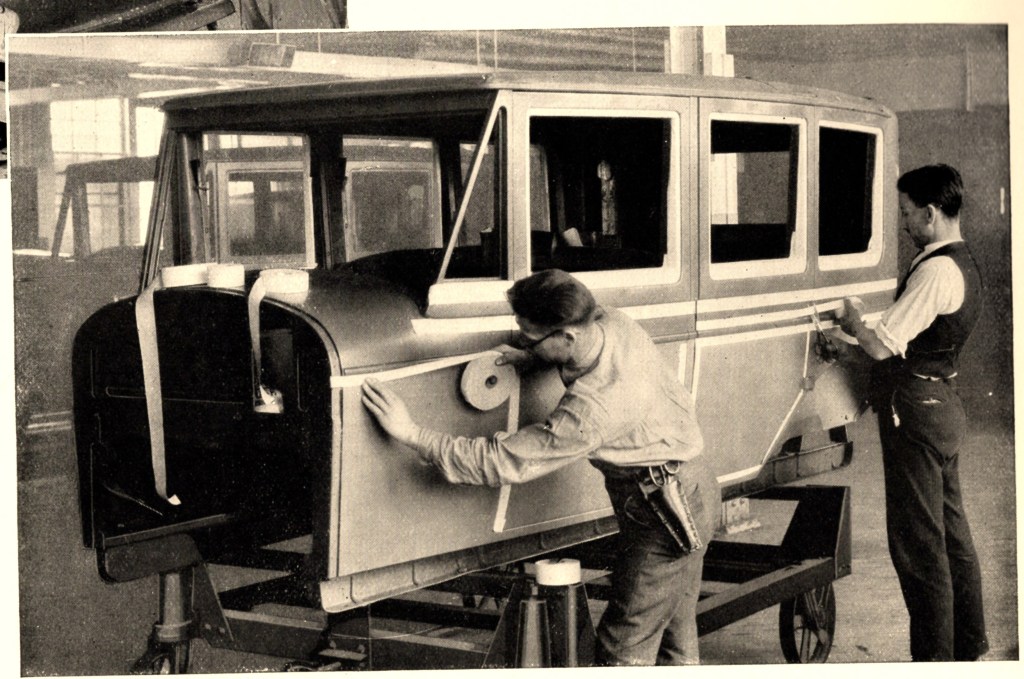
Lincoln was turning a profit within a year after its acquisition by Ford. Edsel expanded its catalog of in-house body styles, but virtually the entire alphabet of coachbuilders was immediately drawn to the Model L’s high-quality chassis, plus Edsel’s practice of buying custom bodies in significant quantities given the Lincoln’s sales volume. Besides Brunn and Judkins, the list grew to encompass Anderson, Babcock, Fleetwood, Holbrook, LeBaron, Locke, Murphy, Murray, Towson, Rollston, Waterhouse and Willoughby, among others. Arguably, more coachbuilt bodies were mounted on Lincoln underpinnings than any other chassis, with 32 bodies offered in 1926 alone.
The list of great Lincolns created under Ford ownership is distinguished and historic. Sales roared in the 1920s, and the line expanded with the great V-12 KB of 1932, still wearing a broad range of both factory and custom bodies. Sales, however, plunged as the Depression arrived. By this time, Edsel had a genuine stylist on the payroll in the person of Eugene “Bob” Gregorie, who had previously penned styling for Brewster and whose first assignment after joining Ford was to create the Model Y for the British market. Another stylist who joined Ford was Dutch-born John Tjaarda, who came from Briggs Manufacturing, which like Brewster, built a lot of bodywork that cloaked Ford chassis. As with the 1920s, the Depression proved to be a merciless shaking-out for the auto industry, claiming Lincoln luxury rivals including Stutz, Marmon and Pierce-Arrow. Edsel realized that going down market would be Lincoln’s only salvation, despite its exclusively using V-12 power since 1932, since Ford production boss Charles Sorenson was urging Henry to shutter the brand.
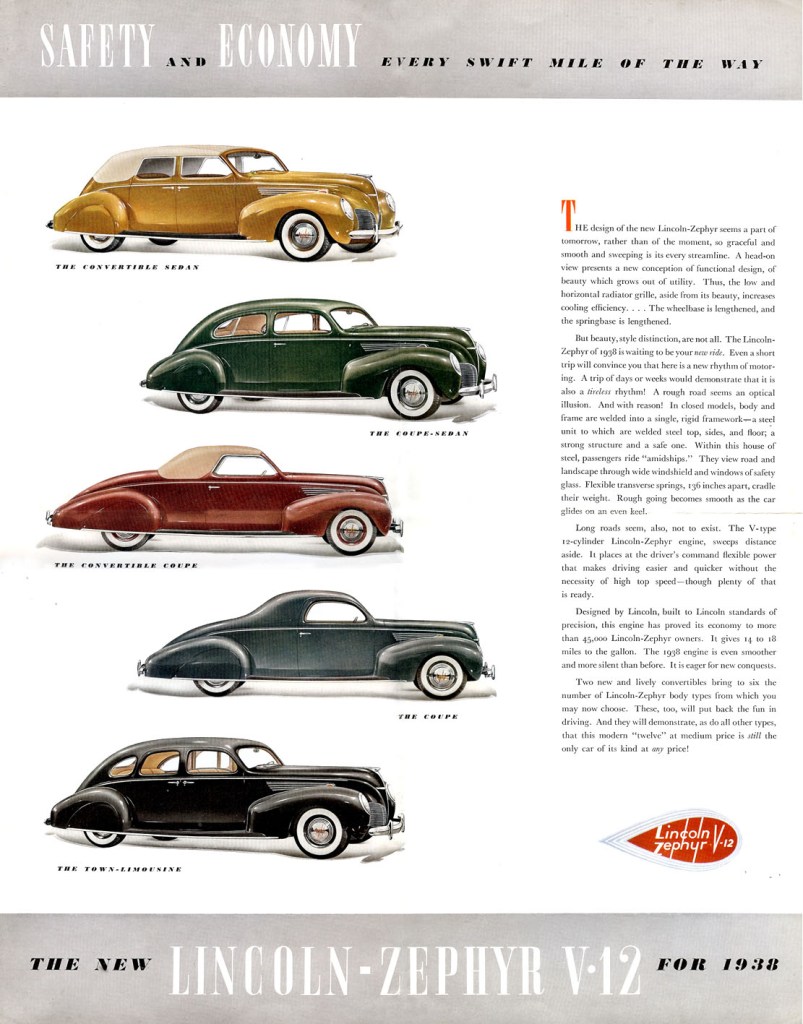
Edsel tapped Tjaarda, who was fascinated by advanced streamlining such as Tatra’s, to create a mid-price Lincoln, powered by a newly commissioned V-12 that was based on Ford’s flathead V-8. Gregorie contributed to the project by contributing its low-drag prow. The appearance of its semi-unitized bodywork was less jarring than the streamlined Chrysler Airflow, and 13,656 examples of the Lincoln-Zephyr, as it was called, were sold in its first year, 1936, against only 1,523 Model Ks. The sales gulf only widened the following year, and as David put it, “The Zephyr really kept the Lincoln brand alive. Without it, there would have been no postwar Lincoln, because 350 cars in 1939 wasn’t enough to guarantee a happy postwar future.” Edsel knew it, too, and was already mulling yet another Lincoln that would redefine the nameplate.
In 1938, Edsel asked Gregorie to create a one-off Zephyr with convertible bodywork, with the initial sketch allegedly taking only one hour to complete. Gregorie performed an early interpretation of channeling and sectioning, as they existed in the very young hot rod and custom-car worlds, with a long hood, a short trunk lid, and a vertical spare tire in the European idiom. Edsel showed it off the following spring at his winter home in Hobe Sound, Florida, and came back to Dearborn with 200 firm orders from interested buyers. A limited number, around 400, were approved for production in 1940. The Lincoln Continental, which existed in facelifted form through 1948, is still considered the most influential design in Lincoln history. They were the last cars produced by a major U.S. automaker with V-12 power, and among the latest-built cars recognized as Full Classics by the CCCA. The Continental’s impact swells well beyond the market impact of its production totals.
“That car really set the pace, for Lincoln and also for a number of other cars, like the Thunderbird with the long hood and short deck, and the Mustang, with that formal roof,” said Jack Telnack, who joined Lincoln as a stylist in 1958 and rose to vice-president of design at Ford. “My Dad took me to the Ford Rotunda in Dearborn, and boy, that was it. That car really inspired me. I had to know all about it. It led the way for Lincoln design, with the formal roof, the closed C-pillar, and the tire on the back, it was a very continental look. Bob Gregorie was my hero from Day One.”
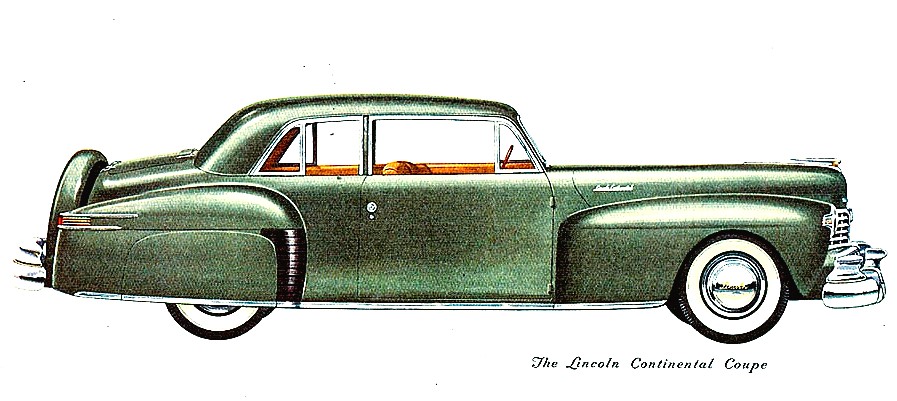
the most beautiful automobile ever made.
The Continental is where the thematic line of Lincoln styling begins in earnest. So much, in fact, that Lincoln was determined to make lightning strike twice. General Motors had introduced high-profile, low-production luxury cars including the Cadillac Eldorado, Buick Skylark and Oldsmobile Fiesta inspired by its Motorama shows of the early 1950s. Under the tutelage of William Clay Ford, Edsel’s son, Ford established the short-lived Continental Division to construct a premium, no-compromises automobile. The concept team was led by stylist John Reinhart, body engineer Gordon Buehrig of Cord 810 fame, and engineer Harley Copp. The resultant car was the Continental Mark II of 1956, marketed directly against Rolls-Royce. Ford lost at least $1,000 on every Mark II produced despite a retail price just below $10,000 and a sellout of the entire 2,550-unit production run for 1956, with another 444 produced for 1957, its last year. The themes were familiar to anyone knowledgeable about Lincoln history: Exquisite build quality and understated lines, but retaining the long-hood, short-deck countenance of its Continental predecessor.
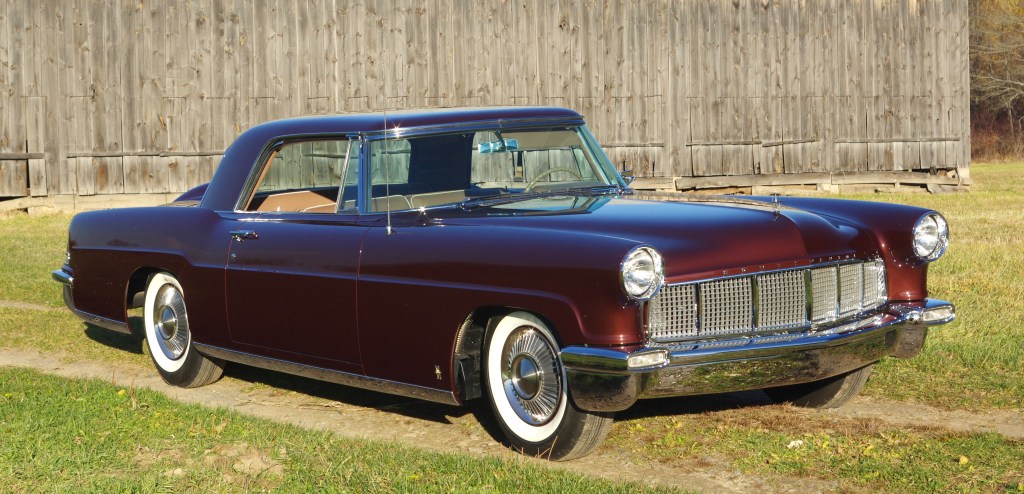
“It was truly timeless, so much so that a lot of people refer to as being a good design even today,” said Joel Dickson of New Jersey, archivist of the Lincoln Motor Car Foundation. “It was kind of like a symbol of the original Continental. It was a comfortable four-seater. It wasn’t a heavily chromed-up car like a lot of the competition was. It showed refinement. There were certain body lines of the car that were unique, and gave it style, but weren’t what you’d call overdone, grotesque or otherwise dripping with chrome.”
The character that Edsel and Gregorie first crafted in 1939, and the Reinhart team reinforced in 1956, established a linear look that translated, directly or not, to other Ford products in years to come, a process that was accelerated when Elwood Engel, who cut his styling teeth under Harley Earl at GM, created the slab-sided line of Continentals for the 1961 model year, with their forward-opening rear doors. As Jack recalled, “Engel was in competition with Joe Oros, who ran the Ford studio. They were doing a Thunderbird and a Lincoln at the same time. As it turned out, when they finally reviewed the cars, they decided to take the T-bird first and they went with Joe Oros’ car, a very clean and simple car with the airfoil front. Engel’s design was more boxy but also super clean. It was designed to be a T-bird as a four-seater with two doors, but they finally decided at a meeting with Henry Ford II to make Joe Oros’ car the T-bird, but then take Engel’s car, stretch it, make it a four-door with a very formal look, and make it a Lincoln. One of the best Lincolns ever, in my opinion.”
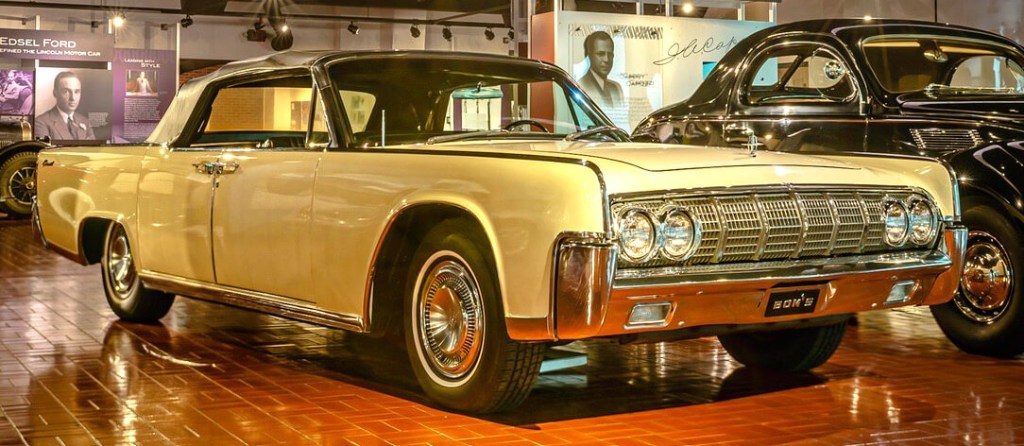
a hit with car buyers who appreciated the car’s formal boxy design.
The Lincoln lineage, traceable to Gregorie’s first Continental, is clearly evidenced in the original two-seat Thunderbird, the follow-on “Square Birds,” the original Ford Mustang, and the squared, conservative full-size Fords that lasted from the middle 1960s right through the 1980s. Another generation of this thematic chord came into existence after Ford opened its new Wixom assembly plant in Novi Township, Michigan, to produce cars with unitized body construction, including the 1961-forward Continental line. The coming of mass-production personal cars, led by the 1966 Oldsmobile Toronado and its front-drive corporate cousin, the 1967 Cadillac Eldorado, prompted Ford to revive the Continental formula yet again, with the unibody Continental Mark III of 1969.
The Mark Series, as it’s known, actually began with the canted-headlamp Marks of 1958 through 1960, but the 1969 Mark III was a marked success, handily outselling the Eldorado, and smoothing the path for the Mark IV and Mark V that followed. The downsized Mark VI that came next in 1980 led to the Fox platform-derived and highly aerodynamic Mark VII, which shared its lines with the Telnack-drawn “aero” Ford Thunderbird of 1983, and even included a legitimate performance model, the Continental (later, Lincoln) Mark VII LSC of 1984, fitted with the 5.0-liter V-8 from the Fox-platform Mustang GT. While called a Lincoln, not a Continental, the theme continued from 1993 through 1998 with the Mark VIII, built on the new Ford FN10 platform and powered by the new Ford modular 4.6-liter DOHC V-8 with 32 valves.
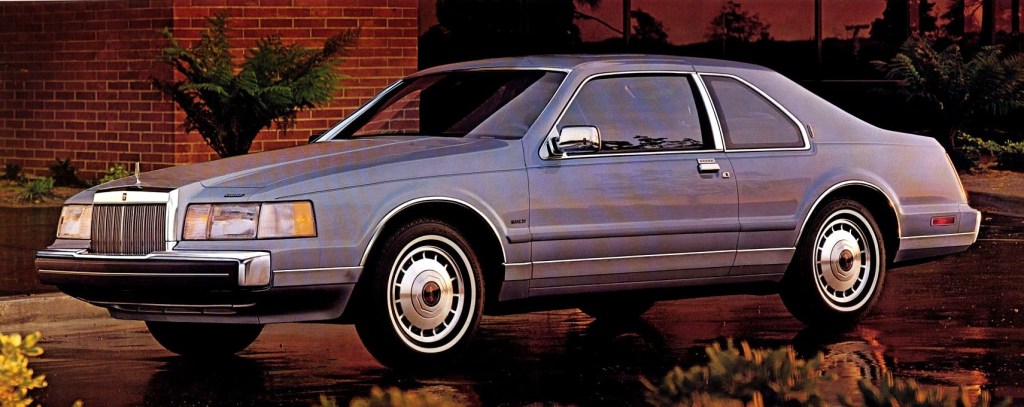
“The body shell was the same between the 1983 T-bird and the 1984 Mark VII. Same windshield, different roofline but a lot of commonality under the skin,” Jack described. “It confirmed that we should give the car an aero look. That car became the Mark VII, which was a very successful design. I don’t think anybody knew it shared a windshield, cowl and platform with the T-bird, but it didn’t matter. That got us going with the aero look in the Lincoln family of cars, a real departure from anything else we’d done.”
Literally, from the day the first Model L arrived, Lincoln provided discriminating buyers with transportation that was fashionable but always dignified, imposing but never intemperate. For 100 years now, and certainly extending into the next hundred, Lincoln has been the embodiment of luxury trimmed in buttoned-down respectability. Even now, it validates the vision that Edsel Ford first voiced a century ago.
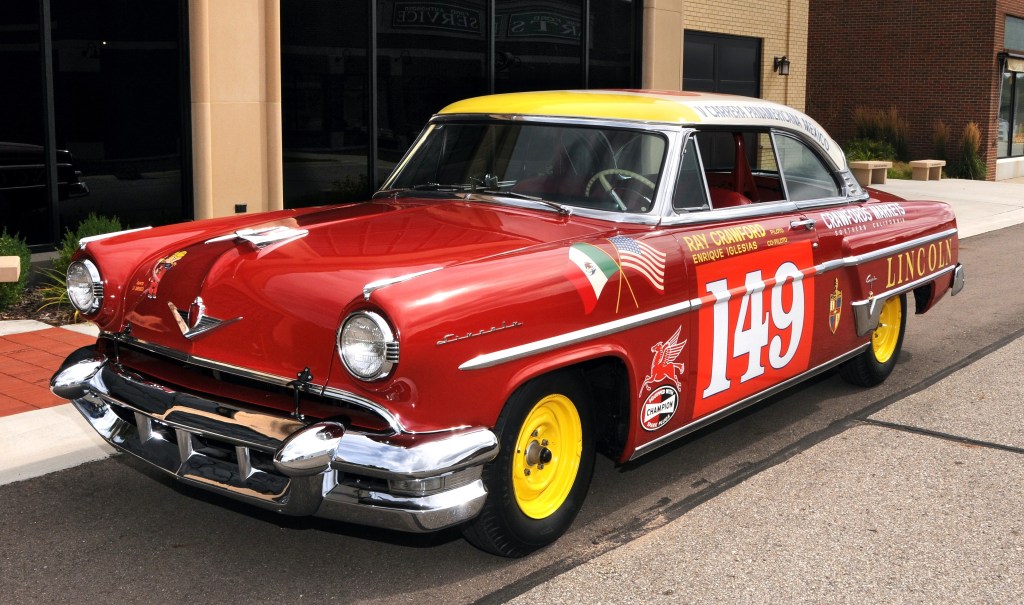
Two Capri hardtops were entered and they finished in 9th and 10th overall.
Outstanding article of Lincoln history. I’ve been a fan of Lincolns for as long as I can remember, and I’ve owned a number of them. Currently I have a ’39 Lincoln Zephyr Convertible Club Coupe and a ’40 Lincoln Zephyr Continental Cabriolet.