Small in scale but big in imagination, models were the foundation from which full-scale automobiles were built
By Walt Gosden – Illustrations Courtesy of the Walt Gosden archives
Artists’ renderings were the foundation for the engineers to translate into visual reality what the car companies had created to offer for the new car models each year. Many manufacturers choose to use an independent coach or body builder to supply the completed body shells (minus interiors) according to their specifications.
There were many coach and wagon body firms spread across the United States. Some companies specialized in commercial bodies, while others only built suburbans or station wagons. For many, the transition from horse-drawn carriage body construction to automobile bodies was fairly effortless thanks to the commonality of wood frames used in both.
Drawing of a body was the first step, but if a body design needed to be the property of the manufacturer, they would apply for a patent, so it couldn’t be copied or mimicked by another company, especially if it found favor with the public, translating into more sales. Patent models were then built and submitted to prove the specific design was unique to the company. They were often created by skilled pattern makers employed by the car manufacturer or bodybuilder. Once approved, the prototype model samples would then be used as a mold from which a sample would be cast. These three-dimensional patent models were actually the first of several styling models that had to be made prior to producing the final full-size product. They were also used to promote the designs the body builders had to offer.
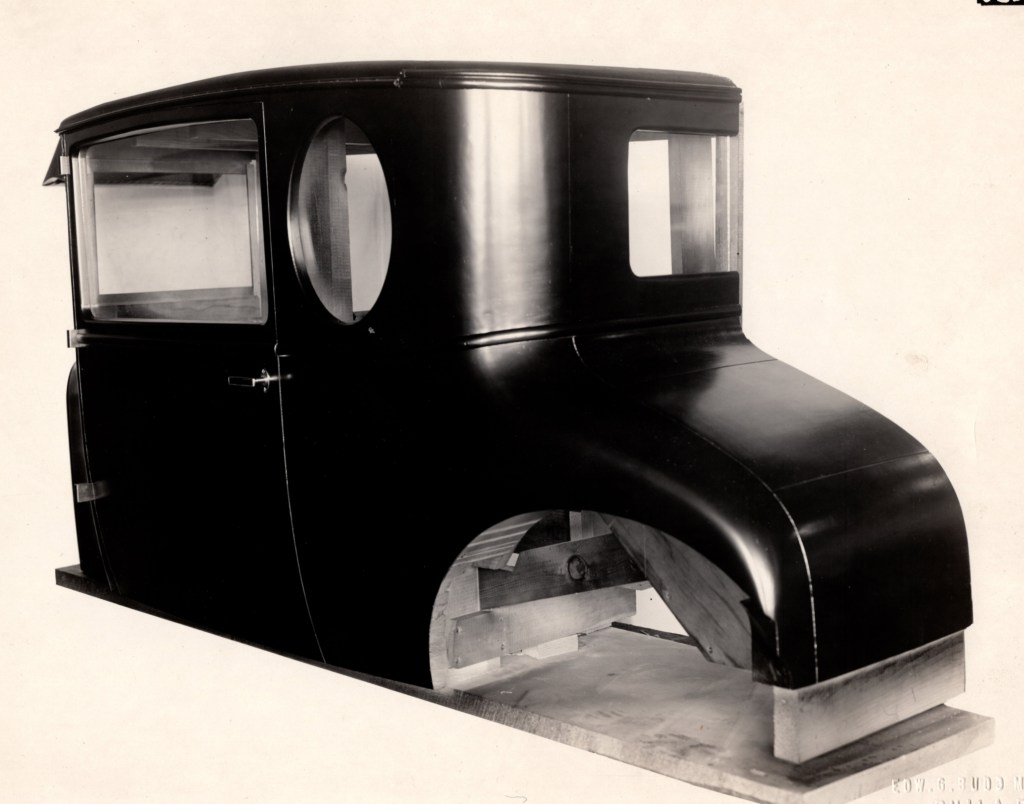
to support this styling model.
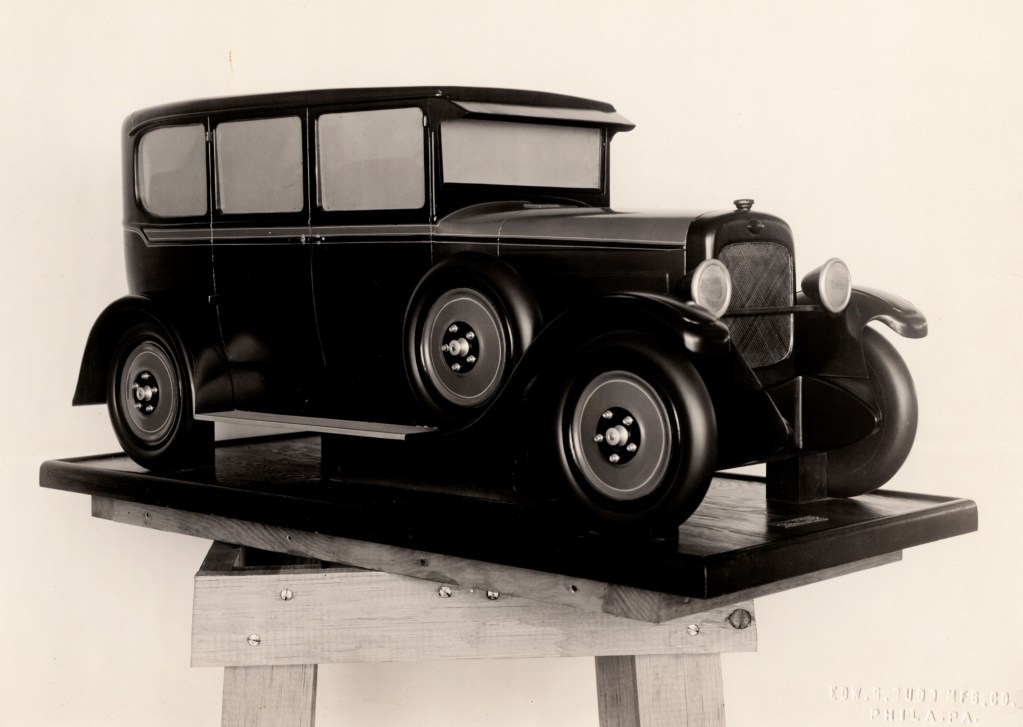
Each model was handcrafted from wood and included fenders, wheels, hood, etc., so when presented to an auto manufacturer, it was easier for them to visualize what a completed car would look like from all sides. As the years progressed, patent models transformed into styling models and by the mid-1920s became a major factor in the way car development took place, quickly becoming the expected part of a presentation to determine the eventual build of the final product.
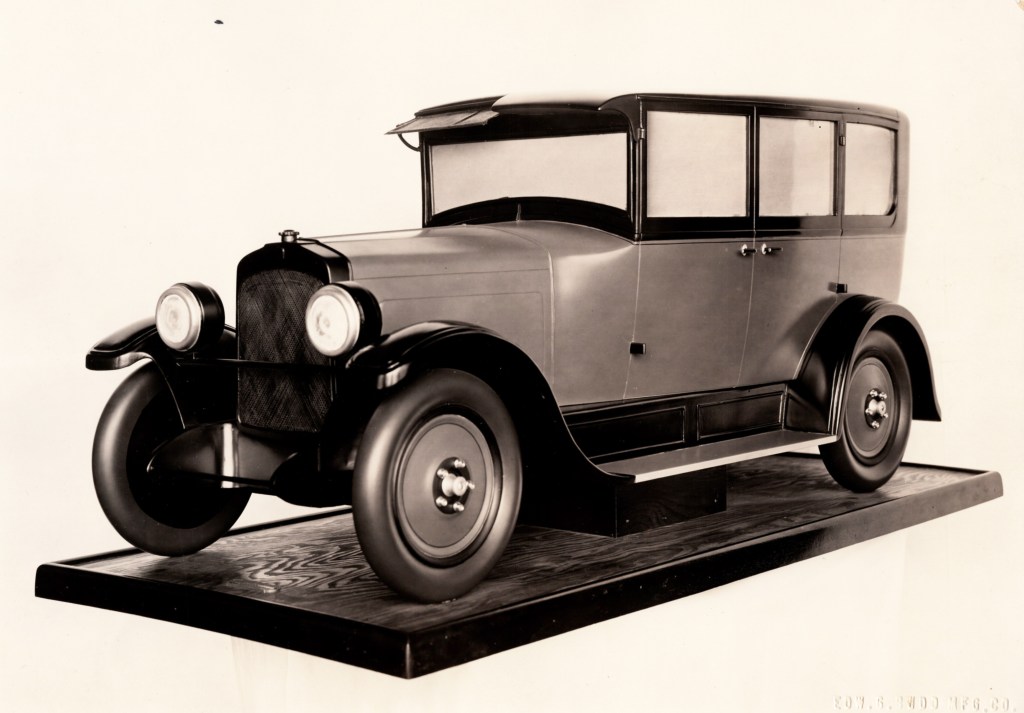
Styling models were not full size. Most were approximately 24 inches in length. While not all body manufacturers made styling models, Budd Manufacturing of Philadelphia was prolific in this mode to present its numerous designs. They were well known and respected for their efforts in the development and advancement of the use of all-steel bodies. They also were active in the design and production of all-steel railway passenger cars and pressed steel disc wheels for automobiles.
In the early 1920s the French car manufacturer Citroen negotiated with Edward G. Budd to secure the rights under license to use the Budd method and machinery to stamp out body panels. Budd imported several Citroen chassis and made several bodies using their all-steel construction method. Budd also made several cutaway bodies to further illustrate and explain how the structure was designed and incorporated for a significantly sturdy and safe body.
The wood display models crafted by Budd were amazingly detailed as well. Pinstriped wheels and body, hubcaps, wheel lugs, door handles and headlamps were all done in perfect detail to resemble the real cars as accurately as possible. Most all of their scale models were four-door sedans.
On the models, the window area was left blank and painted a light color to imitate a glass panel reflection; no interiors were included. If a particular body style had major interest, a full-scale body was made in wood, and the wheels and tires were the real thing as Budd was also a highly respected manufacturer of pressed steel disc wheels. The wheels were placed in position on the full-size mock-up which had a wood chassis supported by wood blocks. The full-size models also had real door handles, and some even a Motometer for added realism. Some had a manufacturer-supplied steel hood, but most were made of wood as were the headlamps. The whole model would be sanded and painted. Some of the full-scale bodies were made in a half section with only one side finished, while others incorporated glass windows as well.
As stated earlier, these styling models were built by hand and based on drawings created in the company’s art department. This was decades before clay became the material of choice to sculpt models. The wood models gave way to clay during the post WWII era when plastic-based clay became available. This material would not dry out and crack and crumble after a certain period of time.
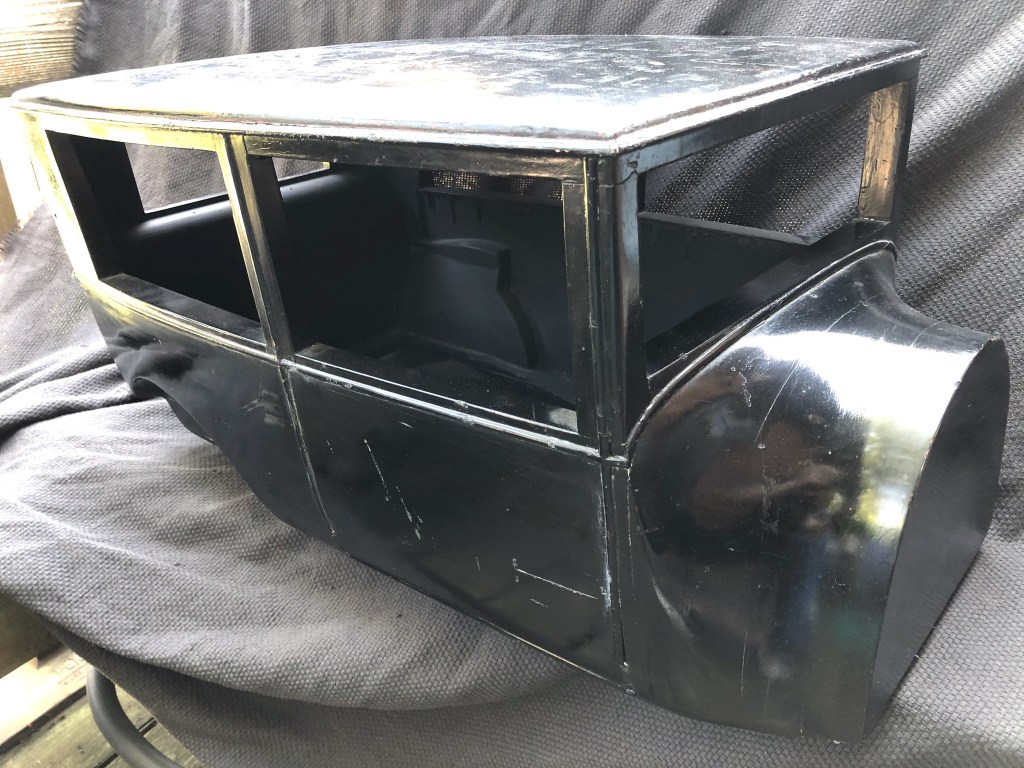
It is 26 x 15 x 13 inches tall. The cowl is solid having been made of many layers of wood.
The exterior surfaces were all sanded and painted in black lacquer.
Try to imagine the skill and labor it took to construct and finish off both the smaller and full-scale models when they were made of wood. The enthusiasm for the final example presented would be a huge factor to determine who would be building the body style selected. Once that was determined and a contract signed, giant presses would have to be fitted with dies that were created to stamp out the body panel sections that would eventually be welded together to form a complete body. The cost for the new dies was huge as they had to be durable enough to stamp out thousands of pieces with little chance of any downtime for possible repair.
Coachbuilders were not the only ones to use wood models to present a three-dimensional example. Automobile manufacturers also had craftsmen use wood to create fenders and complete automobiles when planning to introduce a new model to the car buying public. In the early 1920s, The Franklin Automobile Company of Syracuse, New York, had at least two wood models at their factory of cars they had plans to build. Both models were about 4-feet long by 2-feet wide and tall.
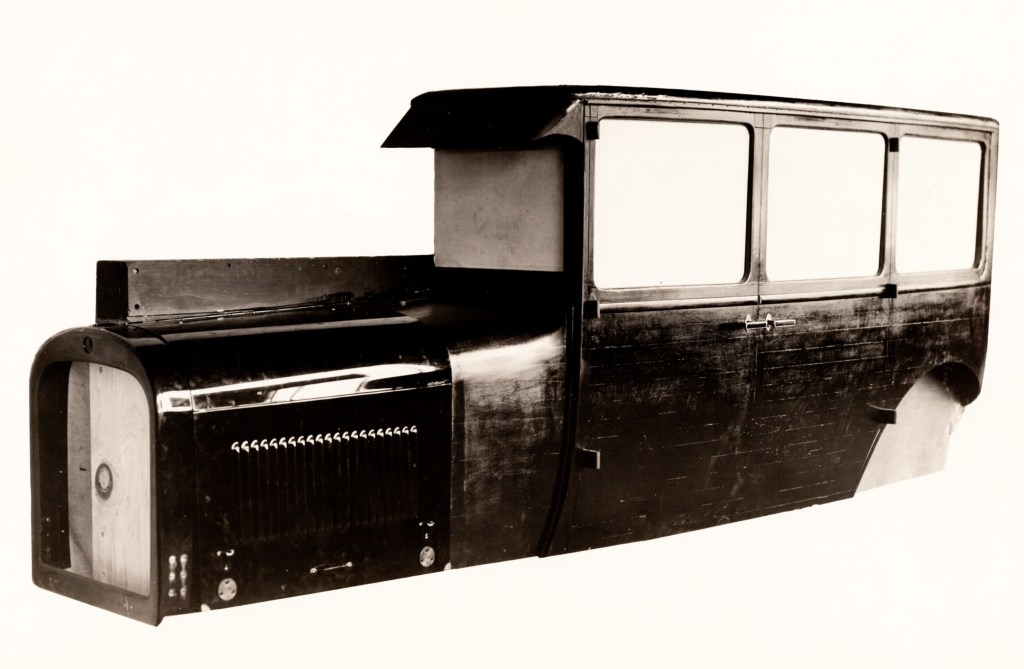
One can see the layered wood slats used in the body to create the shape. Full-size door hinges are used but were made from wood.
In 1948, the Chrysler Corporation issued a soft cover, 95-page book titled “New Wheels in Engineering” that showed all aspects of its production, locations of manufacturing plants, etc. This included views of their Art Department with its experimental drawings and scale models.
In the early 1930s, the Fisher Body Craftsman’s Guild was established to encourage teenage boys to participate in a model car design and build competition. “The young men who designed and built them received university scholarship awards for their excellent work.” These scale model cars were designed and built by hand from scratch (no kits) complete with metal trim and bumpers and then mailed to General Motors for the annual competition. Ages of participants ranged from 12 to 19 years. The boys joined The Craftsman’s Guild and “may design the model of their choice: sports car, convertible, two- or four-door hardtop or sedan, and a station wagon.” The major technical universities would be advisors as well as deans of engineering schools and school superintendents. The finished models would eventually be returned to the boys, but many models got scattered, and some became displays at the numerous Fisher Body plants. The model you see here which dates from 1953, would eventually wind up in the Ohio Fisher Body plant.
Thanks to styling models, so much has been designed and built from hand-drawn artwork and hand-built models to show dimensionally what vehicle bodies could and would look like. The thoughtful artistic imagination, unbridled creativity and extraordinary skill it took to create styling models is truly unsurpassed.
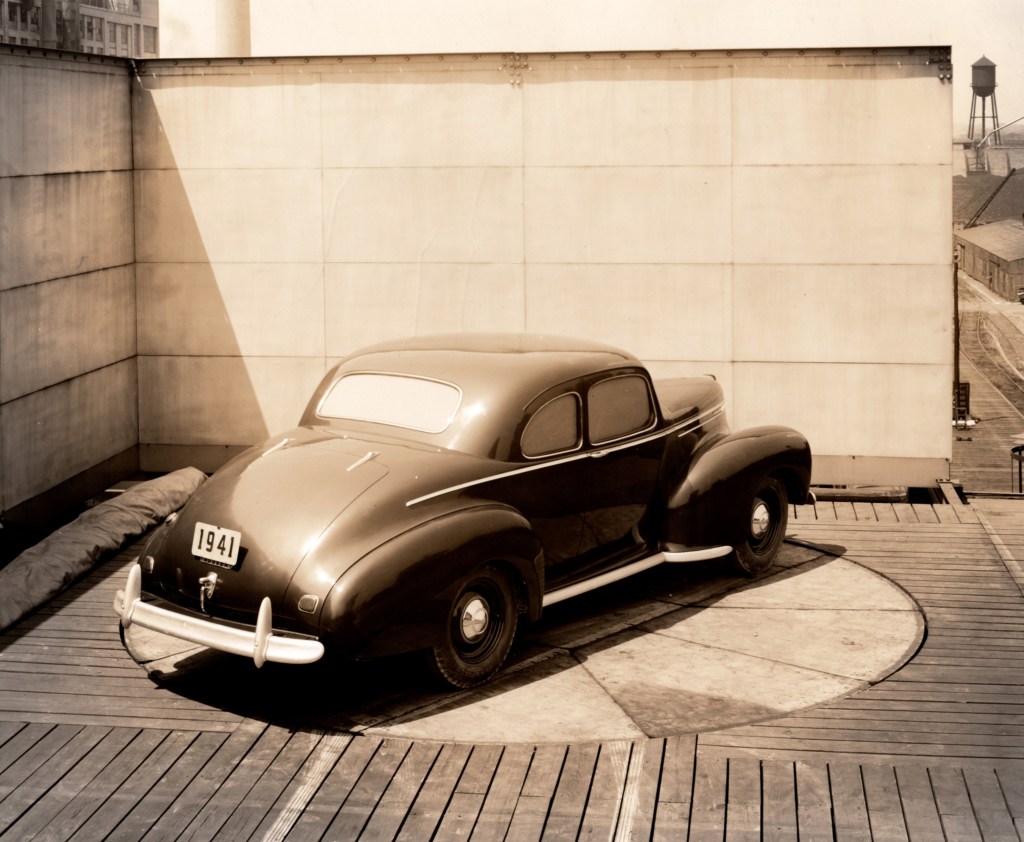
This photo was taken in May 1940.


was hand formed and polished.