Paul Wilson
At 78 years of age, Paul builds one-off sports cars of his own design

Meet retired English professor Paul Wilson of Fairfield, Virginia. At 78-years of age, Paul is finally starting to slow down a bit … to working in his garage only five hours a day. Yes, only five hours. And that’s nearly every day of the week. But Paul isn’t just doing minor tinkering, rebuilding carburetors or polishing paint; he’s building cars . . . from scratch, including their entire bodies.
Filled with unrelenting ambition and a deep, enduring love of the automobile, especially sports cars, it was an absolute pleasure to spend an afternoon with Paul at his garage and workshop on a sunny autumn afternoon this past September. The icing on the cake was a 30-minute ride in his fabulous Lamborghini Miura on the seriously winding back country roads in central Virginia. Yes, we zoomed passed the 100 MPH mark several times, with the Miura sticking like glue to the road. But before we talk about his Lamborghini, let’s back track a bit and find out why Paul owns the cars he does.
Like many of us, it began when he was a little kid handing tools to his father as he worked on his cars. It was the mid-‘50s, and one of his dad’s most memorable old cars was a 1930s-era Rolls-Royce. That close relationship cemented Paul’s love of cars, but it was also his strong admiration of outstanding automotive designs and shapes that cultivated his interest and desire to build cars of his own devise.
Knowing he wouldn’t be able to build the car of his dreams until much later in life, in the early 1960s when he was barely 20 years old, Paul decided to start accumulating the parts he thought he would one day need while they were still available and cheap to buy. He admitted, “I didn’t have any metalworking skill, so the early strategy was that I have a pretty good eye for contours, and it seems to me that if I’m clever enough, I can go to a junkyard and find the parts I need.”
During the ensuing years, his teacher’s salary didn’t afford him the ability to buy the cars of his dreams, nor did he have the time, so he bought and traded his way up the collector-car ladder. He remembers, “I bought then sold cars in order to make enough money to get the next car that I really wanted. That process went on my whole life; I’ve owned over 100 collector cars. Through the years I can live with a car, but it has to look fabulous – that’s #1. And it has to be fun to drive. It also has to treat me right with no stupid crap to work on. It has to be a sweetheart. All the cars that weren’t my favorite are gone. The cars that I own today are the ones that stayed the course. This explains the random mix of things.”
Paul went on to say, “If it does not thrill me to look at, I don’t care about owning it. I believe it’s superficial to own a car just because it’s a hot car to own. All of my cars one time or another have been considered one of the most beautiful cars ever created. Even my 1966 Lola T70 MKII is considered one of the most beautiful race cars ever designed. I couldn’t afford to buy a running T70, so I bought my Lola in California in pieces, transported it back to Virginia in a U-Haul, and put it back together myself; it took one year to restore. It’s powered by a replacement small-block Chevy 350-cu.in. V-8, but it’s fitted with the original 58mm Weber carbs and crossflow intake that it was originally built with; even the gearbox is original to the car. It won the USRRC race at Riverside and Watkins Glen.”
Then in the early 1980s Paul found his 1956 AC Ace, which was nothing more than a used up old race car. It was equipped at the factory with competition mods such as an extra leaf spring up front and an aeroscreen, but its race history isn’t known. It was originally sold in Venezuela in 1956 and is one of the early two-liter, inline-six Bristol-engine Aces.
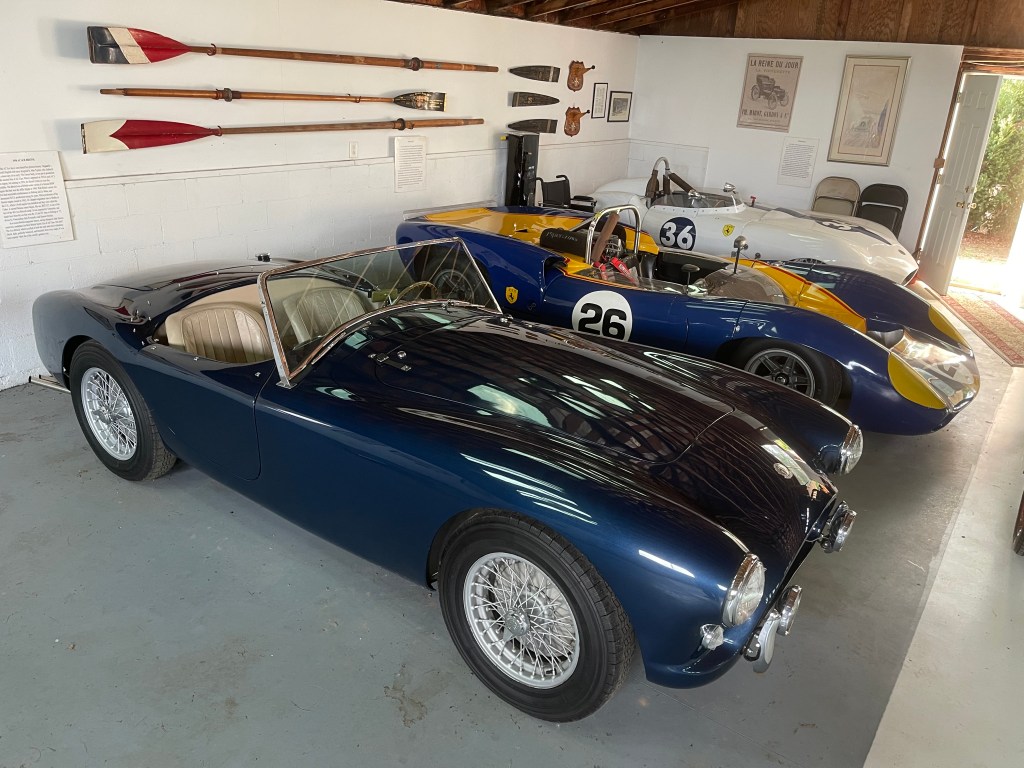
Regarding his view on the Ace’s shape, Paul said, “I love the car’s stance, and it has such a tidy, athletic-looking form. But I don’t like the grille in its original form; that’s why the fog lamps, which block part of the grille, make it work.”
One sports car that Paul always dreamed of owning was a Lamborghini Miura. “On a teacher’s salary, I was never able to own one, so I bought and sold several cars until I was able to afford a Miura,” he told us. “It’s a 1969 model S. I bought it 36 years ago and was only able to buy it by selling my Aston Martin DB2/4. I bought it because it’s a gorgeous, beautiful automobile. Everyone told me I’m going to hate this car because the first time you drive it, the engine is going to make a horrible sound, and the parts are going to cost more than your house, but I ignored everyone.”
Paul continued, “All through the years the Miura’s been an absolute sweetheart. It was painted right before I got it in 1986, but that’s all that’s been done to it. Even the Weber carbs have never been rebuilt or even taken apart. I did have a clutch problem, but that was easy to change, which I did myself because I do all my own work. The engine is sideways, so you take the left rear wheel off, remove a bar, and the clutch was right there. It’s a standard Borg and Beck clutch and throw-out bearing, and changing it couldn’t have been any easier. The interior is completely 100% original to the car, as is everything else.”
Regarding his view on the Miura’s design, Paul revealed that “the two best angles are the distance side profile where you see the sweep up, and the shape of the rear quarter is fabulous. And those wheels are simply beautiful. The front I’m not so excited about, with the headlamps staring at the sky which gives it a goofy grin. But it’s such a wonderful car to drive, and it always starts right up.”

Another Italian beauty that he bought in the 1980s is his 1957 Alfa Romeo 1900 Super Sprint. It too was cosmetically in rough shape, but Paul was able to drive it the 350 miles home. “I did the interior one stitch at a time on a treadle-operated sewing machine,” he recalled. “It’s now pretty nice, but I never did a total restoration; for myself, it didn’t need it. It runs great.”
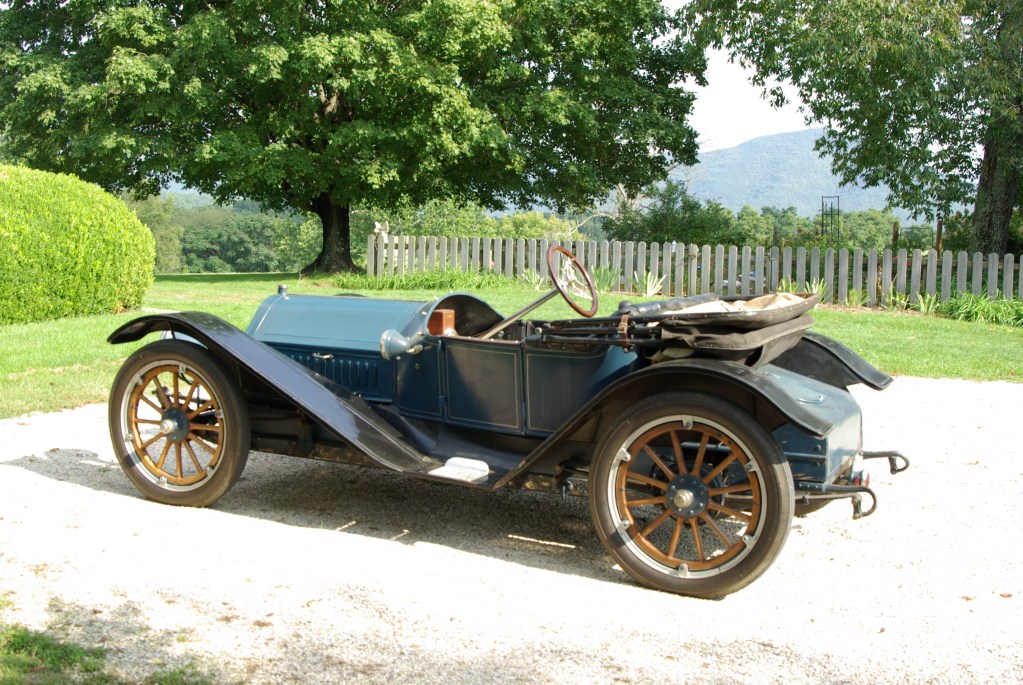
In Paul’s eyes, design is everything, so it doesn’t matter if the car is American, British or Italian, or even a prewar model. That’s why he is smitten by his Detroit-built 1913 Regal Underslung. And it’s completely original, too, including its leather upholstery, convertible top, nickel plating and most of the paint. It’s a real honest car.
Describing the car, Paul said it best: “It’s not bulky looking at all. This is the sleekest of all the Underslung cars of its era. Even the Mercer Raceabout has a bulky look about it – this Regal doesn’t. Look at the whole line of 1913 cars and this car is half-a-foot lower . . . it just works. The proportions are perfect. It has a low slung, long hood look – low body, wide track, driver set well back – startlingly modern and handsome, but the position of the big headlamps and the smooth look of the tapered cowl reveal the designer’s sensitivity. It’s a visual masterpiece!”
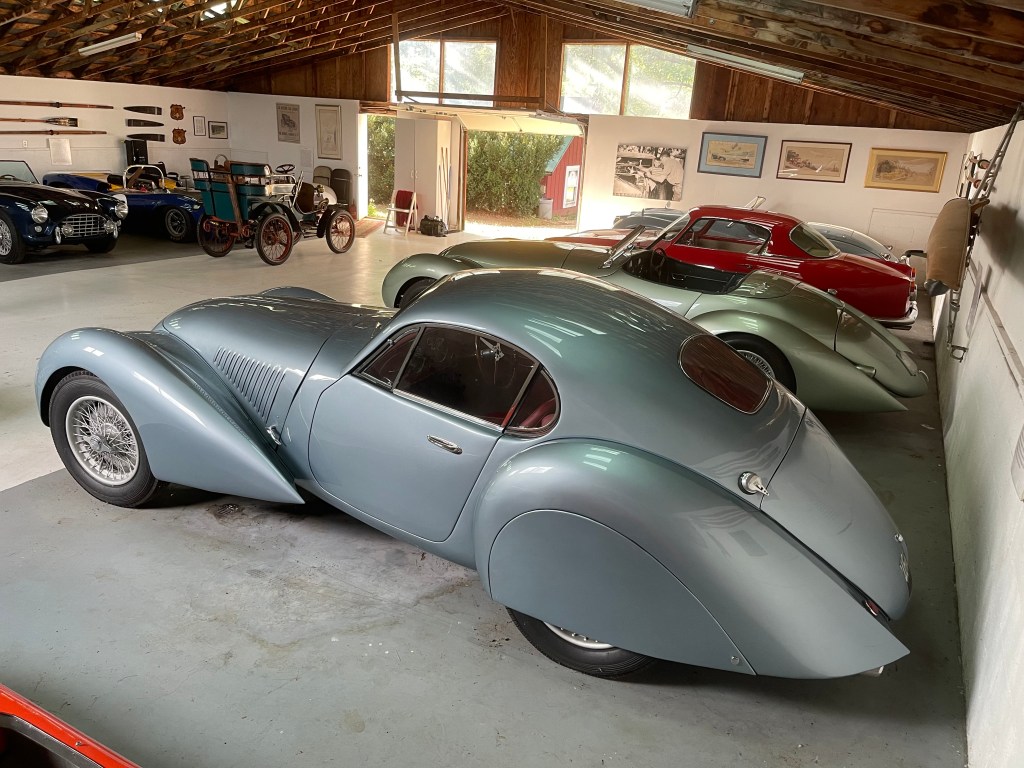
Besides his appreciation for fine design, Paul’s real passion is building self-styled cars from scratch. He reminisced, “I had this idea in the 1970s that I wanted a 2.9 Alfa, but I was never going to have one, but I then realized that 6C 2500s were junkyard cars, and they share the same suspension, had lovely wire wheels and many were coachbuilt. Most were ugly, so no one wanted them during that period, so I thought someday I’m going to have the skills and time to make the body they should have made but didn’t. I thought the 6C 2500 is the ideal Alfa to base it on, so for $1,000 I bought three 6C2500s from a junkyard in Rhode Island. I didn’t have any metalworking skill, so the early strategy was that I have a pretty good eye for contours, and it seems to me that if I’m clever enough I can go to a junkyard and find the body parts I need to envision and construct my dream car through to fruition.”
For his Alfa 2.9-inspired coupe, the roof, side windows and frames, hood and windshield are from a Jaguar XK120 coupe. The front fenders are rear fenders off a 1947 Buick Sedanette, and the rear fenders are slightly modified 1937 Lincoln Zephyr fenders with fender skirts.
“The front of the car has two problems: aesthetic and practical,” Paul explained. “The aesthetic between the time they made the Alfa 2.9 and postwar cars is that they moved the engines forward, a lot, like 16 inches, so I couldn’t just copy a 2.9 front end. I had to make it look like an Alfa. The practical problem is that there weren’t any sitting in junkyards. I made some Lotus Eleven hoods out of aluminum when I owed several of those racing cars, and I soon discovered that working with steel is easier than working with aluminum. It’s no more difficult to form, and much easier to weld.”
Paul went on to tell us, “Some people say my creations are nothing but a street rod, but it’s completely different. This is the synthesis that they already had. Nothing is original on this car, and every little feature I can show you where I cribbed it from. I put my mind inside of a designer from back then with his mindset and materials. I’m going to do what he could have done but didn’t. It’s all period correct, and as beautiful as I can make it. This is the result.”
After he built the coupe, Paul then turned his attention to building his version of an Alfa 2.9 roadster. “I like the roadster better than the coupe because in some cases I had to make certain sections from scratch. The front fenders and rear fenders were completely fabricated from scratch by me. I’m really happy with it. It’s a Toyota Prius color. The color choice, my feeling is, if you have a car that is worthy of recognition, it needs to be something of a medium tone. If you have a black car, all you have is reflections. I don’t want to see reflections. I want to see forms. And forms you can’t see if they’re black – they’re completely hidden.”
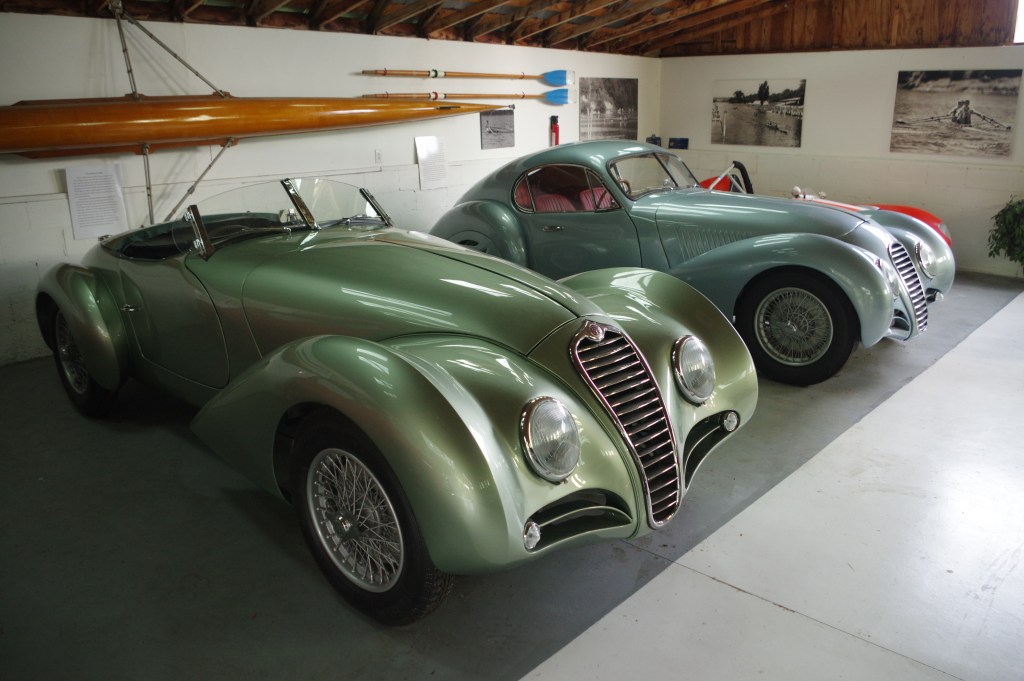
Paul’s current project is his interpretation of an Alfa Romeo BAT car. He’s basing it on an Alfa 1900 chassis he bought in the 1970s. It was a parts car. His friend took the engine, drivetrain and instruments, and Paul took the chassis and other trivial stuff. He told us, “I sold the body and kept the chassis because one day I knew I was going to build a BAT-style car; the Alfa 1900 chassis is what the BAT cars were based on. My version is going to be a modification of the BAT 7 shape, with the crease atop the fender like the 6C2500. The front of the #7 car is the worse part of all three cars. They don’t have a face, or special character, and they don’t take advantage of the three-part grille design, which is one of the great features of an Alfa.”
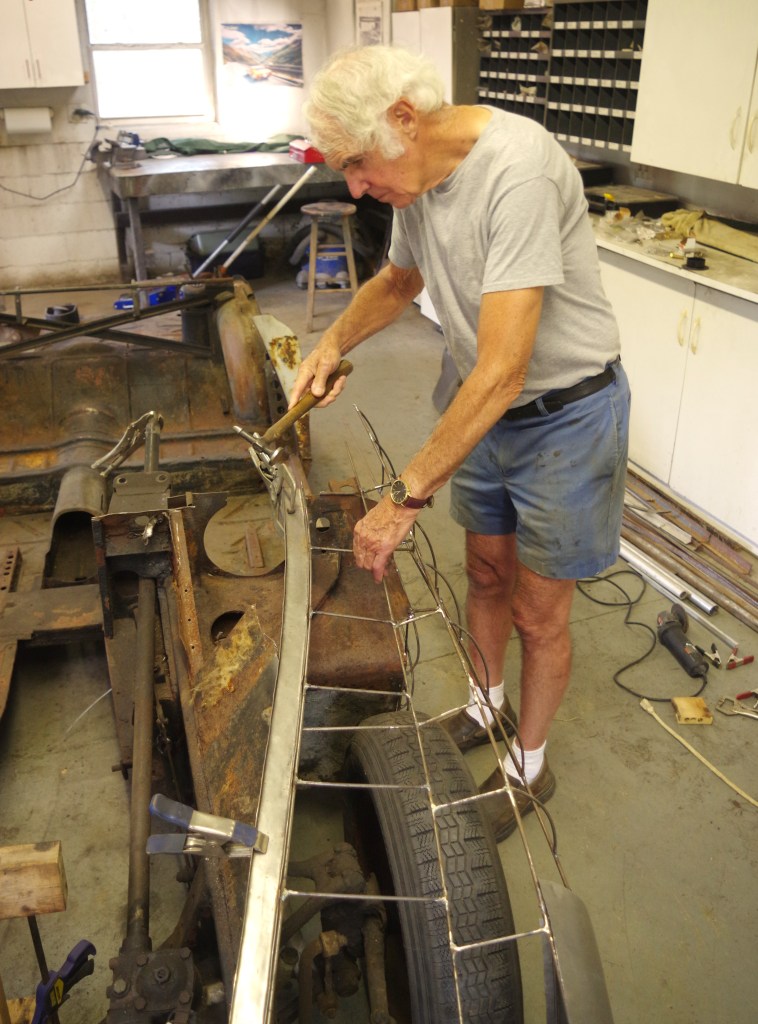
To build the bodies he fabricates, Paul uses the wire form method instead of relying on the time-consuming task of building a wooded body buck. He described his method by telling us, “This is an evolution of my system for making a body buck. I don’t need a three-ton lump of wood in my shop. What the hell do you do with that? Once you make the panel, you can’t look behind it to see if it’s shaped correctly and that it fits right. With a wire form buck, you can look right through it and see every part of it and how it fits. I can design on the car. All I do is take a long piece of metal and bend it as I see fit and work out the form. It’s easier to modify the shape that way, and once the wire metal form is set, the metalwork goes pretty quickly.

When I asked Paul what he enjoys most about building cars, he replied, “Most of it is very satisfying, and it’s just the combination of things. I’ve sat looking at this thing for a very long time, so a good portion of my mind now is thinking about it. And the problems that are solved here are some of them are just how do you do this. It’s very challenging. But I didn’t take any metalworking courses at the logical time; It wasn’t until I started building the roadster. I visited my friends in England and took a four-day course on metalworking and how to use an English Wheels. I didn’t learn any real breakthroughs, but I did learn that the way I work is a lot easier. My shrinker-stretcher is the tool, more so than my English Wheel.
“There are dozens of people who can do better metalworking than I can, but the number of people who can design a car better than I can is much smaller. In terms of craftsmanship, I did my best, but I at least I got the proportions right. You have to love design and be excited about it and love it all your life. I look at with intense interest at fender lines. I’m simply trying to make a car that looks nice. This is why I admire the quality of many street rods simply because their craftsmanship and attention to detail are out of this world.”
At 79 years of age, how does Paul find the energy to do what he does? He explained, “Well, most of it is just good luck and genes, but then, I was a serious athlete for years, such as rowing, which I was on a national team. So that puts your body in a different fitness category from most people. You have to look at your body as a piece of serious sports equipment that you have to keep working right to optimize performance. I work on my cars typically five hours every day and then every three days I do an actual cardiovascular workout such as riding my bike. But the problem is general fitness is fine up to a point. The more insidious thing is that problems do arise such as I recently had a finger problem. Now these hand, arm and leg issues take a lot longer to heel than years ago. There is some pain; specific things are tough particularly when I’m using my hands to constantly hammer the metal into shape, especially since it takes a lot more effort with steel rather than aluminum. At my age, people drop dead every day, so you just never know.”