The Pierce-Arrow gallery at The Gilmore
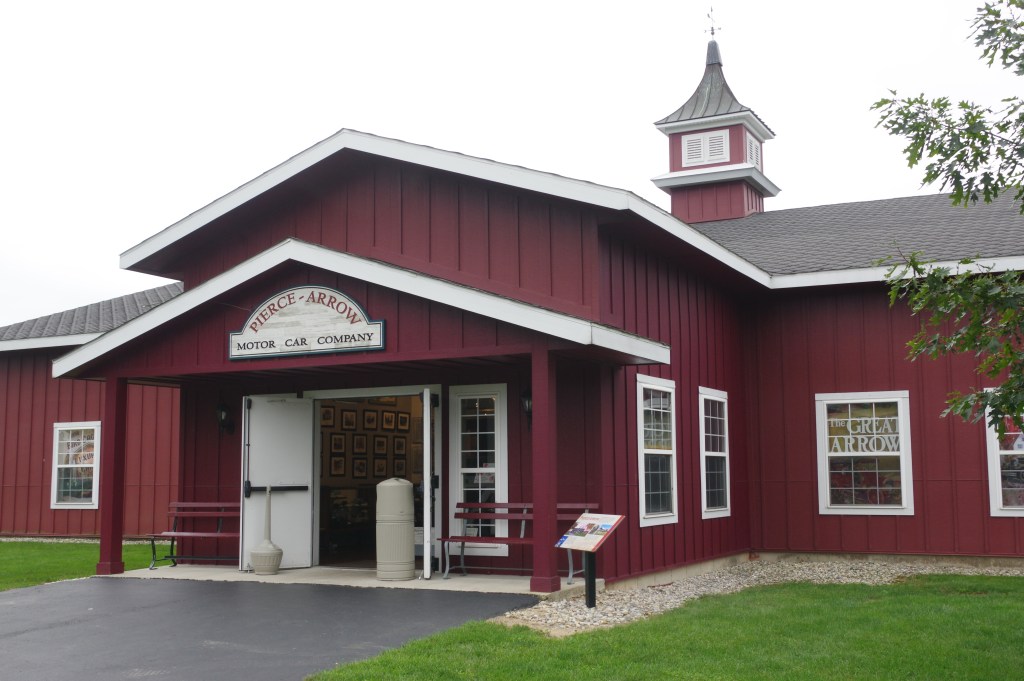
George N. Pierce was one of those industrialists who valued quality over quantity. Irrespective of the product his companies produced, he never compromised on the quality of their construction and design.
The Geo. H. Pierce & Co. was based in Buffalo, New York, where they produced many household items well before they began manufacturing what many historians claim to be one of the finest automobiles ever made: the Pierce-Arrow. Those products included bird cages and bird feeders, bicycles, motorcycles, children’s wagons, ice boxes, camping trailers, commercial trucks, and even hand tools.
Their automobiles, produced from 1901 to 1938, were superior to just about all the other automobiles being made during those years, and were equal in quality to those of Cadillac and Rolls-Royce. Their signature feature were headlamps that flared into the fenders, a design which was quite unique. Overall, their quality of craftsmanship and materials was unsurpassed.
The automobiles shown here are on display in the Pierce-Arrow exhibit located on the grounds of The Gilmore Car Museum in Hickory Corners, Michigan. On its 90-acre campus sits numerous buildings, each dedicated to one particular car brand. All told, there are over 400 vehicles on display and over 19,000 square feet of exhibit space. A functioning 1941 Silk City Diner serves food and drinks and there’s also a recreated 1930s Shell Station on site, too. And their collection of pedal cars is sensational.
For more details go to: http://www.gilmorecarmuseum.org.
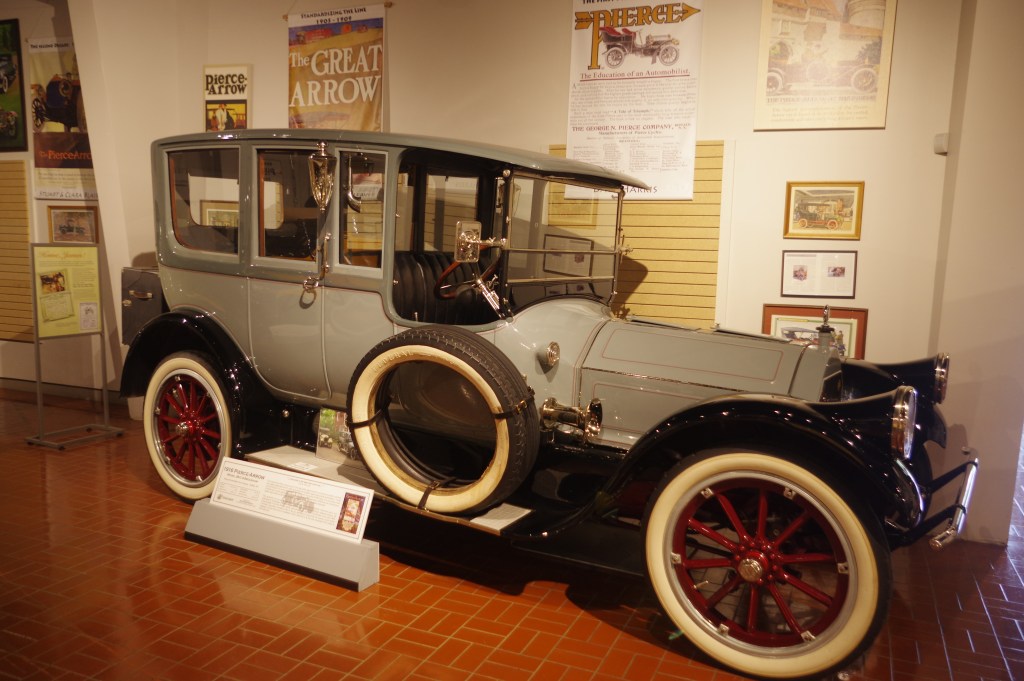
1916 Model 38C-4 Brougham
Of the 2,004 C-4 models produced, this is believed to be the only remaining 1916 model in this Brougham body style. Power is provided by an inline-six displacing 415 cubic inches that develops 38.4 horsepower. Its original factory price was an astounding $5,200.
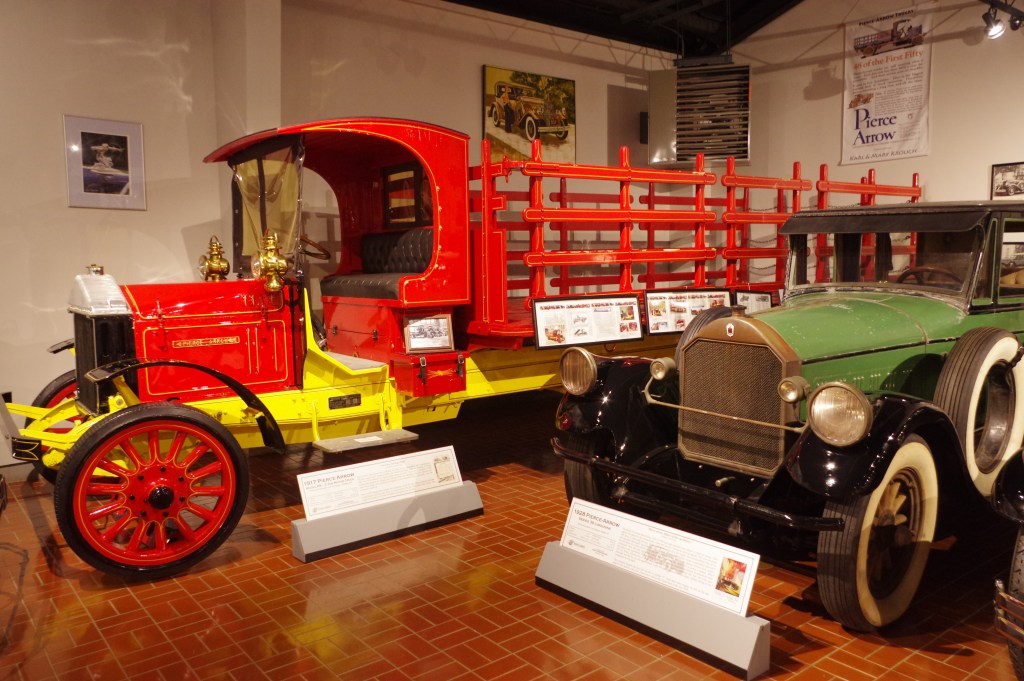
1917 Model R8 5-Ton Motor Truck
Pierce-Arrow’s reputation for their line of commercial trucks was equal to that of their upscale automobiles. This Model R8 was the result of America’s demand for trucks during World War I, one of 7,000 built in 1917 alone. Pierce-Arrow commercial trucks were quite popular in England, too. Priced at $4,500 and weighing 10,300 lbs., power was limited with their 38-horsepower L-head inline-four. Its body sat on a hefty chassis with a wheelbase of 17 feet.
The green car in the foreground is a 1928 Series 36 Limousine that was powered by a dual-valve T-head inline-six that produced 100 horsepower. It had a list price of $7,800.
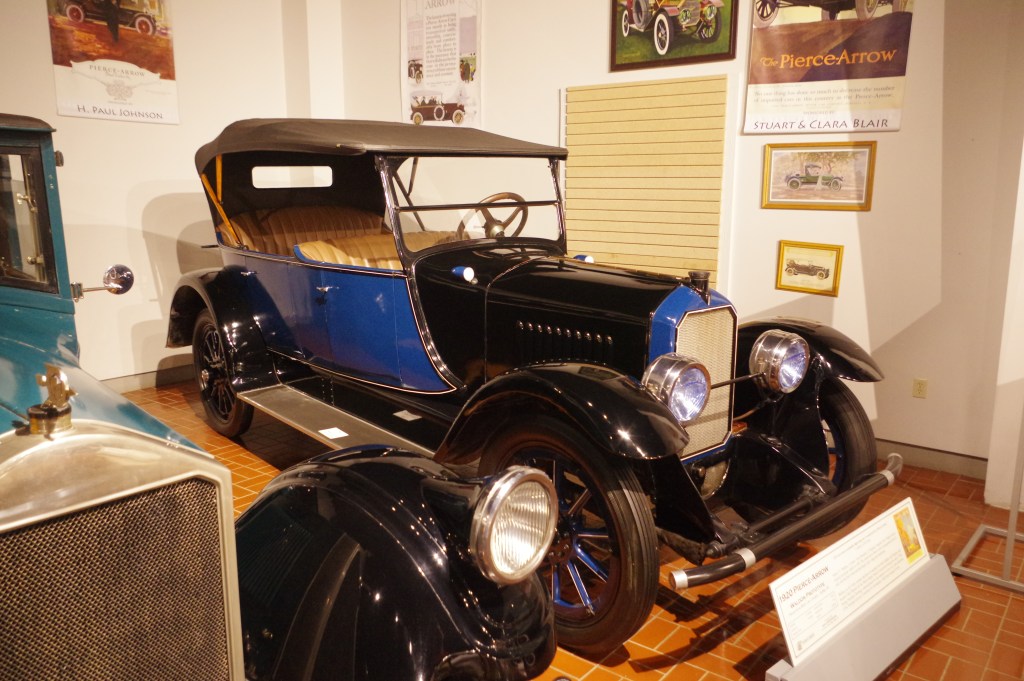
1920 Waldon Prototype
Inspired by a Hispano-Suiza, this one-off prototype was designed by Sidney Waldon, who was once a vice-president of Packard. Pierce-Arrow’s management was quite conservative and chose not to put this car in production. Based on a 1920 Pierce-Arrow 134-inch wheelbase chassis, it was powered by a 50-horsepower four-cylinder engine.
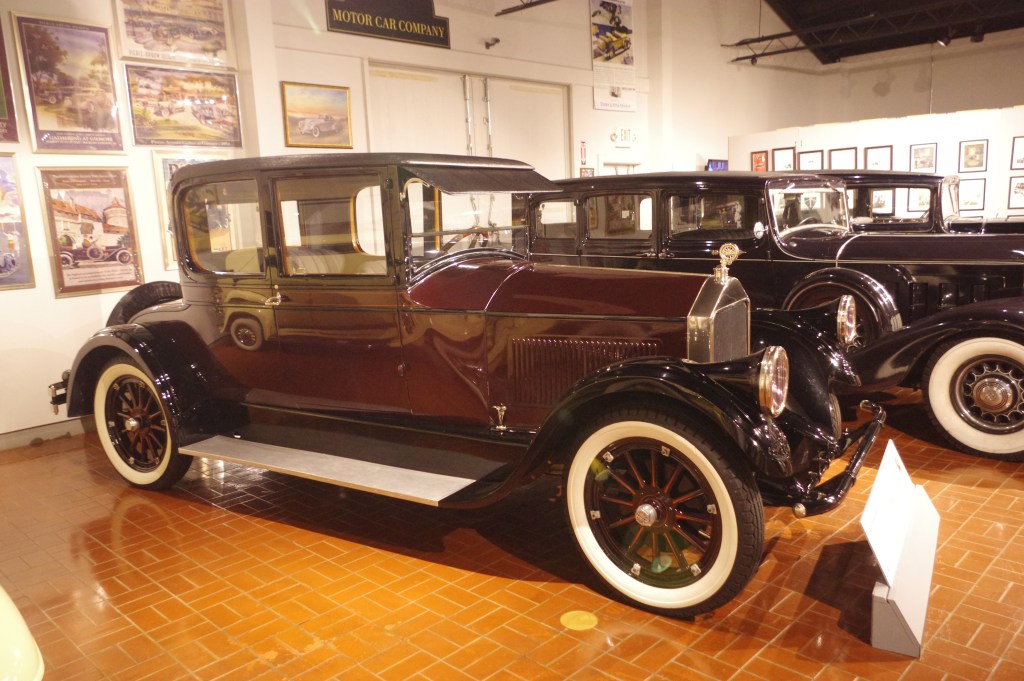
1925 Series 80 Coupe
Designed to appeal to a large market, the Series 80 models had a 70-horsepower inline-six that had its steel engine block mounted on a cast aluminum crankcase. It was available in 10 different body styles and boasted a choice of six color options. With its factory price set at $3,900, approximately 16,000 of all the various Series 80 body styles were built.

1925 Series 80 Opera Coupe
Introduced in 1924, the Series 80 was both smaller and less expensive than Pierce-Arrow’s more traditional models yet had the same build quality. With a factory price of $3,950 for the Opera Coupe, the Series 80 was also available as a four-passenger model. Its 70-horsepower inline-six engine featured an aluminum crankshaft in a steel block. Weighing 3,400 lbs., approximately 16,000 were produced.
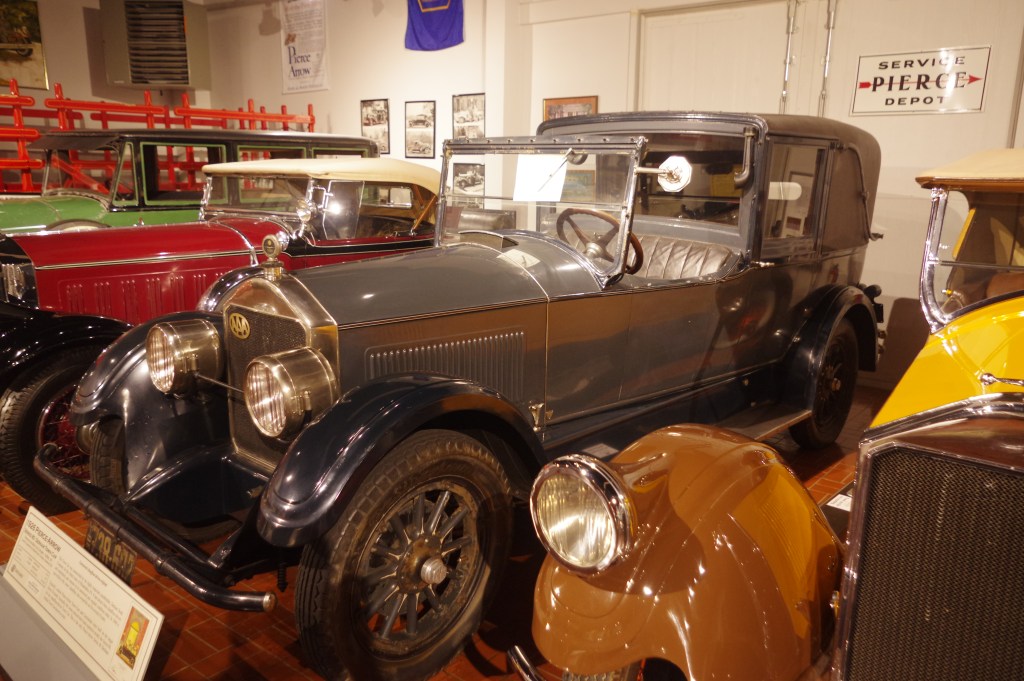
1926 Series 80 Derham Town Car
Nearly 100 years old, this Town Car remains in unrestored original condition. Built by the Derham Body Co. of Rosemont, Pennsylvania, it is the only known coachbuilt Durham-bodied Town Car built on the Series 80 chassis. Costing $7,000 when new, power was provided by a 70-horsepower L-head inline-six.
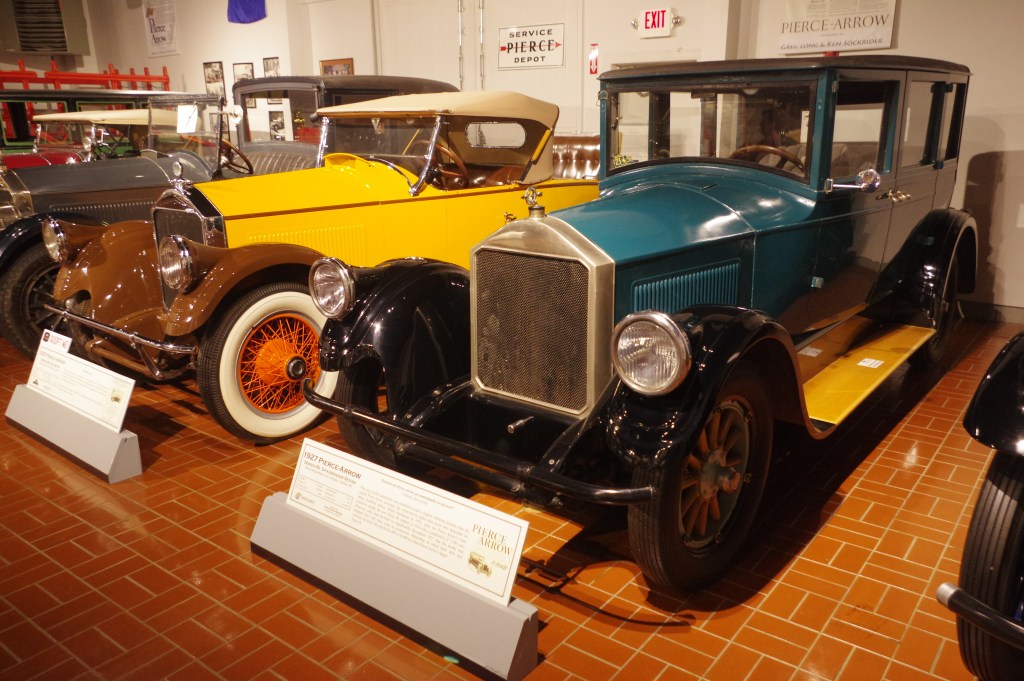
1927 Series 80 Five-Passenger Sedan
This stylish five-passenger sedan was originally introduced in 1925 as Pierce-Arrow’s least expensive model, although it was still expensive for the times with a list price of $3,400. Of the 5,000 Series 80s built for the 1927 model year, each was powered by Pierce-Arrow’s 70-horsepower, L-head, sidevalve inline-six.
The yellow and brown model in the background is a 1925 Series 80 Roadster, one of $5,000 built at a cost of $2,895. Pierce-Arrow called their Series 80 cars “Affordable Luxury” and was the model that introduced four-wheel braking to Pierce-Arrow’s entire line of automobiles.
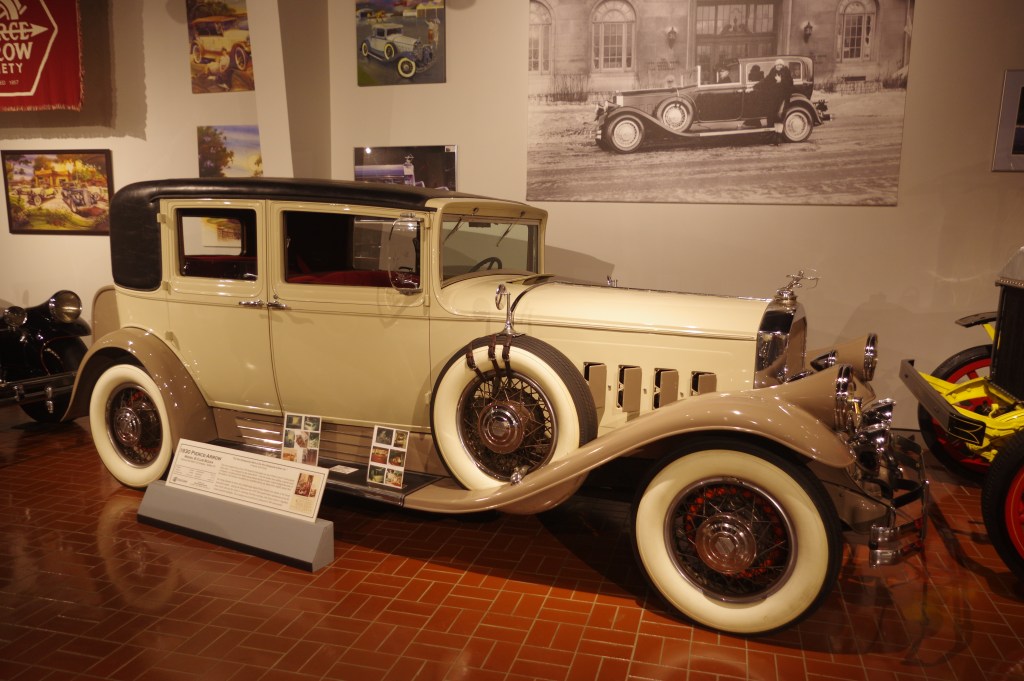
1930 Model B Club Sedan
Unlike many early Pierce-Arrow automobiles that were designed to be chauffeur driven, the Model B was created for the owner-driver in mind, making it one of Pierce-Arrow’s most popular body styles. Fitted with landau irons for a touch of elegance, this handsome four-door sedan was powered by the company’s L-head inline-six that developed 125 horsepower. With a lengthy wheelbase of 134-inches, it had a base price of $4,600.
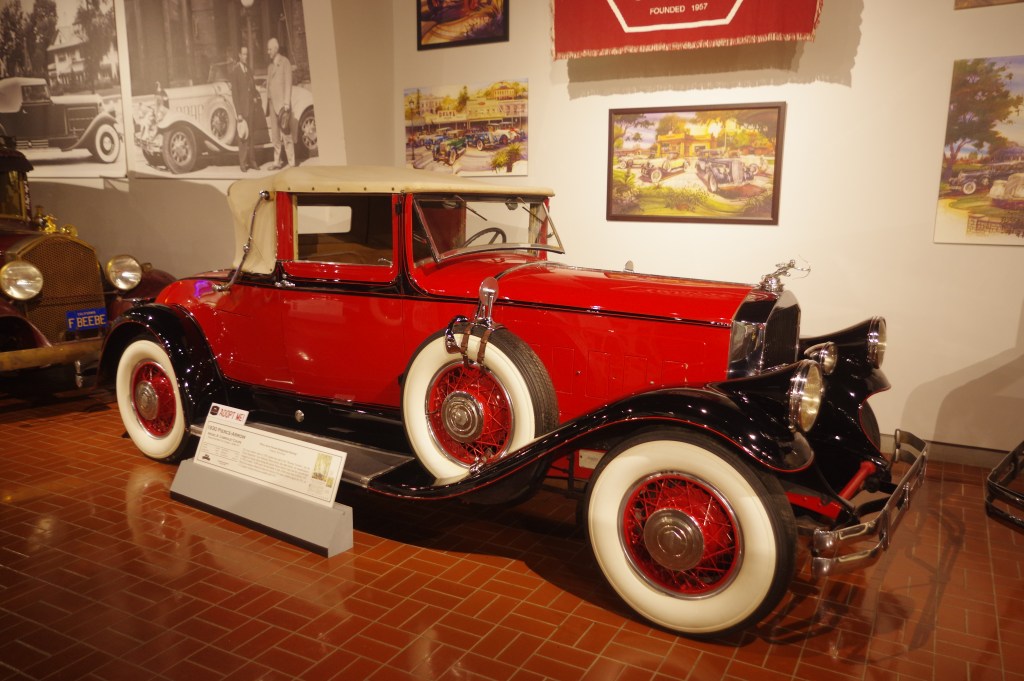
1930 Model B Cabriolet Coupe
These Cabriolet Coupes were very pretty automobiles, but due to the stock market crash of 1929, only 3,639 were built. And they were fairly quick, too, having been powered by a 125-horsepower inline-eight. Like the Club Sedan, the Cabriolet’s sat on the same 134-inch wheelbase but were more affordable with their $2,685 list price.
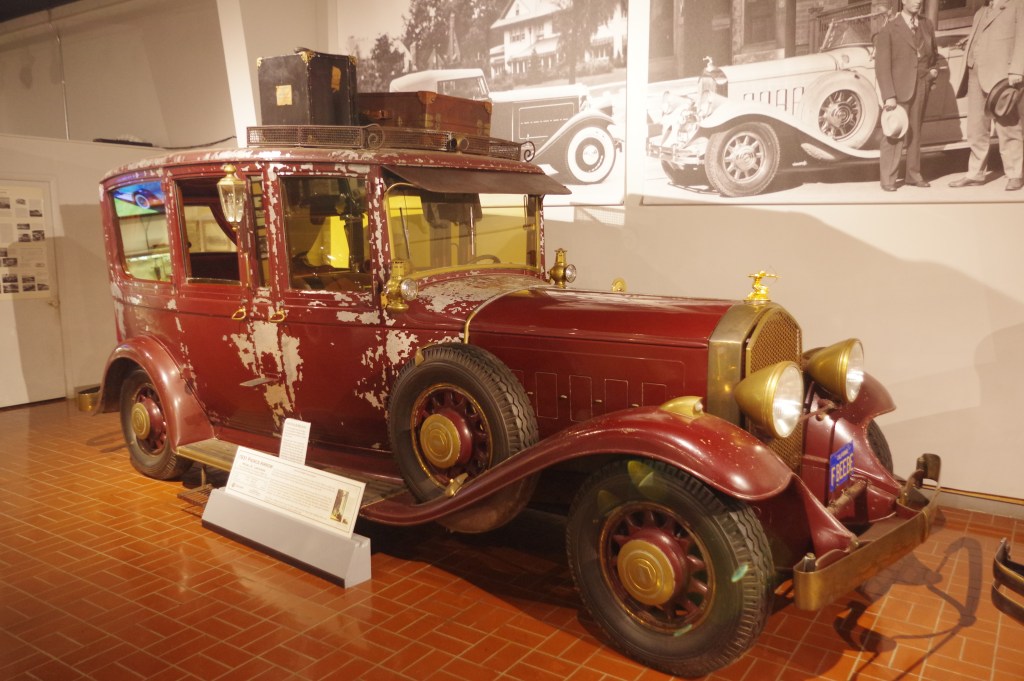
1931 Model 41 Limousine
This is one of two built, both for the same person. As per the Piece-Arrow Museum, “This very unusual limousine was custom-built for Fred Beebe of Cape Cod, Massachusetts. Beebe, an 80-year-old eccentric multi-millionaire and life-long bachelor who lived with his brother and sister at their vast family estate, actually ordered two nearly identical vehicles; one in blue and one in red.
“Original order documents indicate that Beebe wanted this car to be just like his 1913 Piece-Arrow, both in appear and appointments, and he specified very detailed measurements and requirements. This car was not to have Pierce-Arrow’s most recognizable feature – headlights which flare into the fenders – but was to have traditional headlights. It was also to include brass hardware throughout, carriage lamps, a roof rack, foot warmed, ceiling netting to accommodate top hats, and two passenger-to-chauffeur telephones. Also note the unique windshield wipers that run from side to side.”
The car’s original paint may be flaking off its cast aluminum body, but this limousine remains in unrestored condition. Weighting 6,000 lbs. and sitting on a long 147-inch wheelbase with its 132-horsepower inline-eight, it cost $9,500 to build.
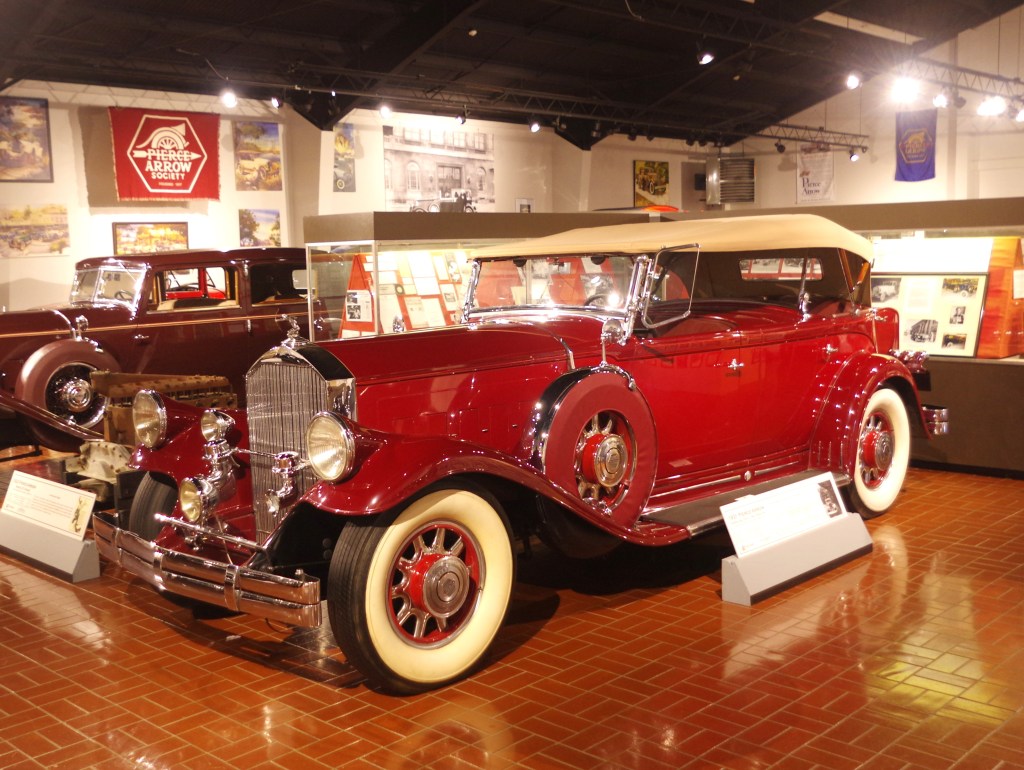
1931 Series 42 Dual-Cowl Phaeton
This Series 42 was Pierce-Arrow’s mid-range model, only slightly less expensive than their top-of-the-line Model 41. With a price tag of $3,625, it had a 132-horsepower inline-eight which made it one of their most popular models. A total of 800 of all Series 42 models were produced for 1931. Fitted on a 142-inch wheelbase, the dual-cowl model had a body that was beautifully crafted.
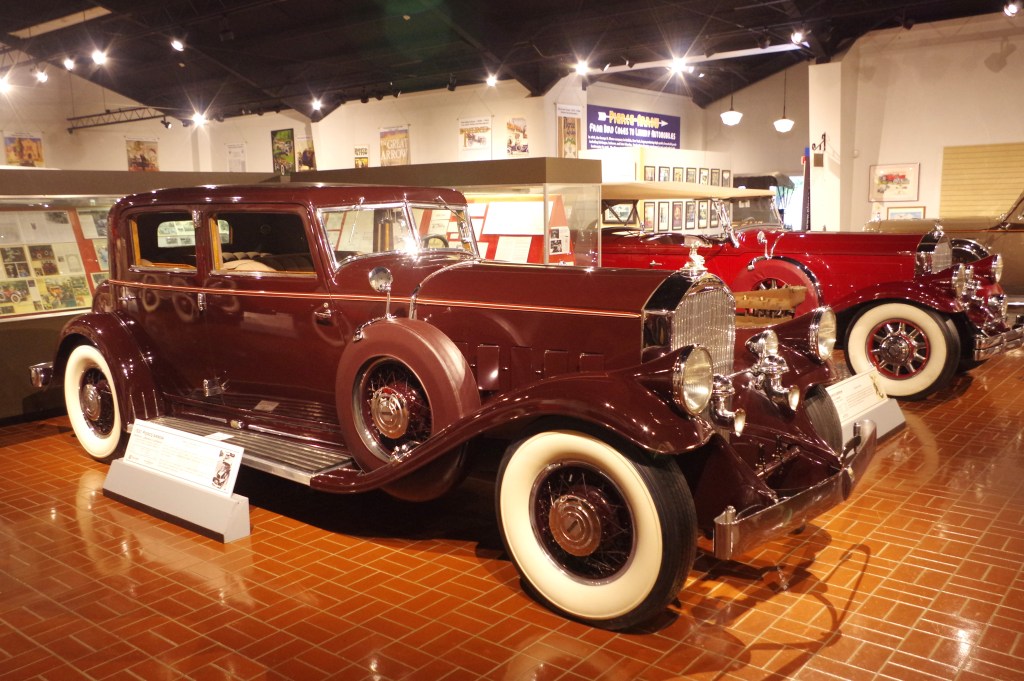
1931 Series 41 LeBaron Club Sedan
Introduced at the 1930 Chicago Automobile Salon, only 25 LeBaron-bodied Club Sedans were built. This stately four-door sedan has a 147-inch wheelbase and is powered by Pierce-Arrow’s inline-eight with 132 horsepower. What this custom coachbuilt automobile cost to build is unknown.

1932 Model 54 Convertible Sedan
According to the Pierce-Arrow Museum, “The Convertible Sedan offered the comfort of a sedan with the option of putting the top down when desirable. The center door posts have a removable section, and once the top is lowered, it becomes a full convertible. This all-weather design was a practical option for a vehicle in daily use.” Most interesting is the Model 54’s V-12 engine; it displaces 429 cubic inches and develops 150 horsepower. Only about 30 examples were built, with each costing $4,200.

1937 Model 1702 7-Passenger Sedan
Produced for the 1936 and ’37 model years, this was the end of the line for Pierce-Arrow. However, with plenty of parts left over, a few Model 1702s were assembled for 1938, and all were hand built. Power was provided by a 462-cu.in. V-12 that made 185 horsepower, and it sat on a 144-inch wheelbase chassis. With each costing $3,795, only 167 were produced.
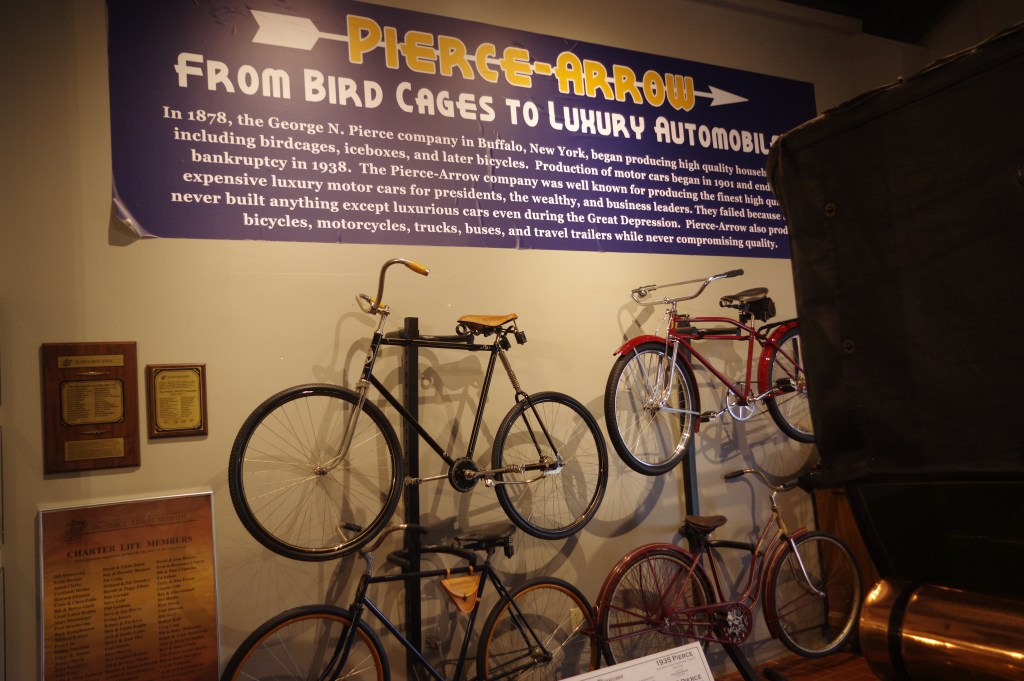
Pierce-Arrow Bicycles
On display in the museum are various examples of the different types of bicycles the company produced. Their quality of construction was superb.
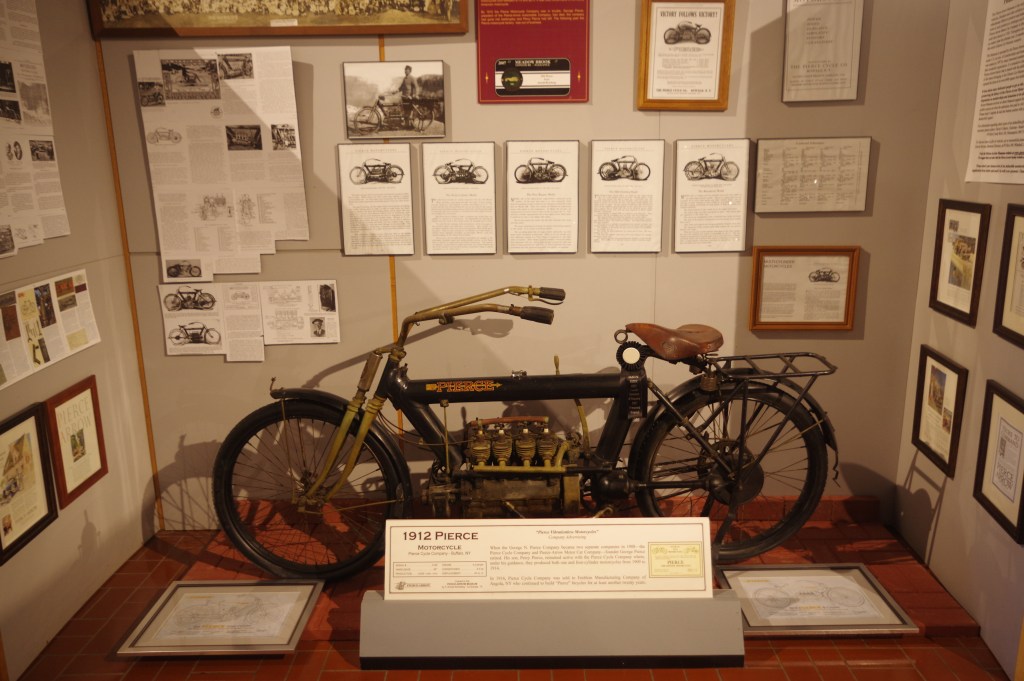
1912 Motorcycle
After company founder George Pierce retired from his automobile and cycle companies, his son, Percy Pierce, remained in charge of the Pierce Cycle Company. Under his guidance, they produced motorcycles from 1909 to 1914. Two types were made: one-cylinder and four-cylinder models. This is a four-cylinder version that was powered by a 42-cu.in. engine putting out 6.5 horsepower. Total production of all Pierce motorcycles reached 8,500 examples.

Wall of Greatness
The museum is filled with all sorts of Pierce-Arrow memorabilia, such as these framed advertisements. Other objects on display include the company’s bird cages, wagons, and tools.