Why you need to document all the work performed on your car and the many parts that were bought
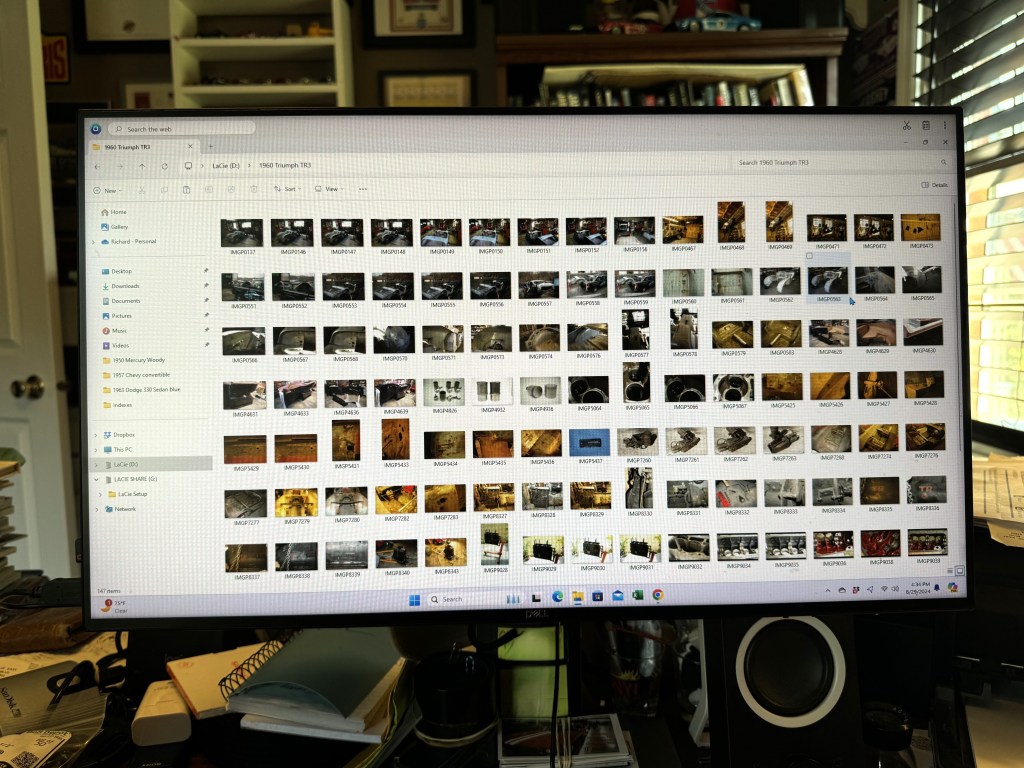
Nowadays, the use of smart phones comes in handy as they’re easy to use and the quality of the images they take is excellent. You can then download the images to your desk computer or laptop and make them easily accessible for future use. Then you save them to a specific file and/or archival DVD. The file for my Triumph TR3A project is aptly labeled: 1960 Triumph TR3A. Kinda simple, huh? And having the ability to blow up the images for better viewing makes digital imaging an important part of any restoration today.
Besides having the much-needed reference images, there are other reasons why documenting the car’s pre-restoration state is essential. The more information you have about the car before it’s taken apart, such as the condition of its body and all the ancillary parts and trim pieces, the smoother the project will go because you will know ahead of time just what type and amount of work needs to accomplished and which components need to be replaced.
Having this information on hand will then allow you the opportunity to write up a work list for all that has to be rebuilt, repainted or restored and a parts list for everything that either needs to be rebuilt, replaced or replated. As the project proceeds ahead, you can use those lists to mark off the jobs that have been completed, which will have the added benefit of providing you with a visual source of inspiration.
But the single most important component of the documentation process is that of photography. All too often at car shows we have seen well-restored cars only to discover upon talking to the owner that no photographs were ever taken of the car while it was under restoration. And that’s too bad. Having photographic proof that details just how your car was restored to a future prospective buyer is the best way to prove all the work that had been done, and how that work was performed.
The most significant aspect for taking photos during your car’s restoration is that you are documenting the work that was done to it. There’s more than meets the eye when it comes to shiny new paint and recently sewed upholstery. It’s all the really important work that took place under all that superficial decorative cover up which really matters, and that’s what serious enthusiasts and collectors in the know want to see.
If you plan on selling your car in the near future, prospective buyers will want to see the quality of the work that was performed. They want to see how the sheet metal was repaired, how much rust the body originally had and which body panels were replaced; they want to see the condition of the floor pans that are hidden below the carpeting; they want to see all the new parts that were installed in the engine and that it was even rebuilt in the first place; and they want to view the entire rebuilding process to ensure all was done correctly and professionally.

Thanks to digital cameras, it has never been easier, quicker and more affordable to take photographs of your car while it’s either at the restorer’s shop or while you yourself are doing the work in your own garage. No longer do you have the expense of buying and developing film, which always limited you to just how many photographs you were able to take. With digital cameras, it doesn’t matter if you take one photo or 3,000 photos, the cost to develop the electronic images is still the same……zero.
But documenting a car’s restoration goes well beyond just taking photographs. It involves a paper trail, which includes the car’s original invoice or bill of sale, its build sheet if available, and all receipts showing work done to it by previous owners. Gathering information regarding who actually owned the car is worthless, unless, of course, one of those owners was a well-known celebrity or someone held in high regard, such as the president of a car company, an athlete, rock star or a famous racing driver.
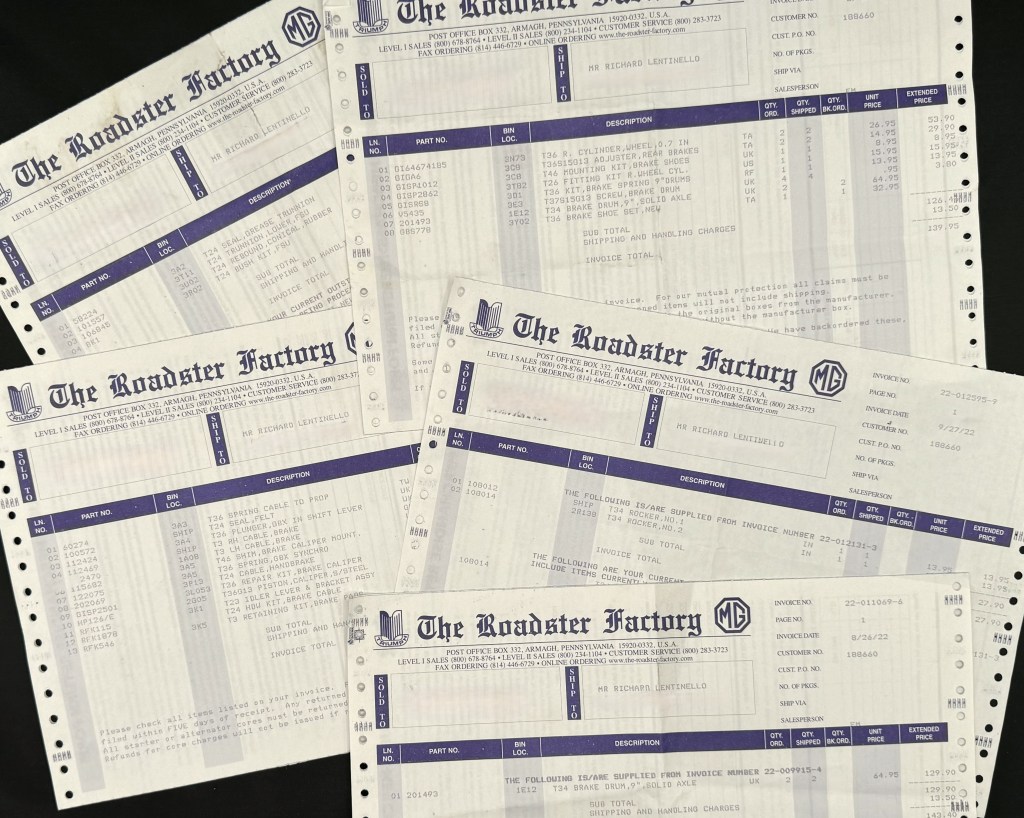
Save all receipts that were incurred during your car’s restoration. Those include receipts for all the parts that you had to buy, supplies and tools, chemicals and paints, transportation, storage and, of course, any work that had to be done by a specialist or shop, such as sandblasting, powder coating, welding, body repair, painting, upholstery or mechanical work. These receipts are the proof needed to back up the documentation of work that was shown in the photographs that you took during the restoration.
Another source of worthwhile documentation is a car’s maintenance log, but this is something that too few car owners actually kept. This log will show when the engine oil had been changed and at what mileage, what was greased, tires rotated, and any other regular maintenance items such as tune-ups and filter changes. More than anything a well-documented maintenance log shows just how well the car had been cared for by those previous owners and maintained. A log such as this is something that you should consider starting when the restoration of your vehicle is completed.