The South African Amazon
Choosing a 1967 Volvo 122S as a first car proved to be the right decision
Storyteller and Photographer | Michael Brittan
Growing up in South Africa, I cut my teeth on a variety of family cars including a 1946 Hillman Minx and a 1948 Chevrolet Stylemaster, the latter assembled from CKD Canadian components by GM South African at their Port Elizabeth plant.
Following graduate school aboard in the mid-1960s, I returned to South Africa and decided to buy a car that was a little more interesting than the then parental Vauxhall Velox. The choice boiled down to an Alfa Romeo Giulia Super 1600 or a Volvo B18 Amazon. The Alfa’s high-revving, twin-cam engine and 5-speed shifter gave it the performance edge over Volvo’s venerable B18 and 4-speed gearbox, though the advantage was somewhat nullified by Johannesburg’s power-robbing altitude of 6,000 feet.
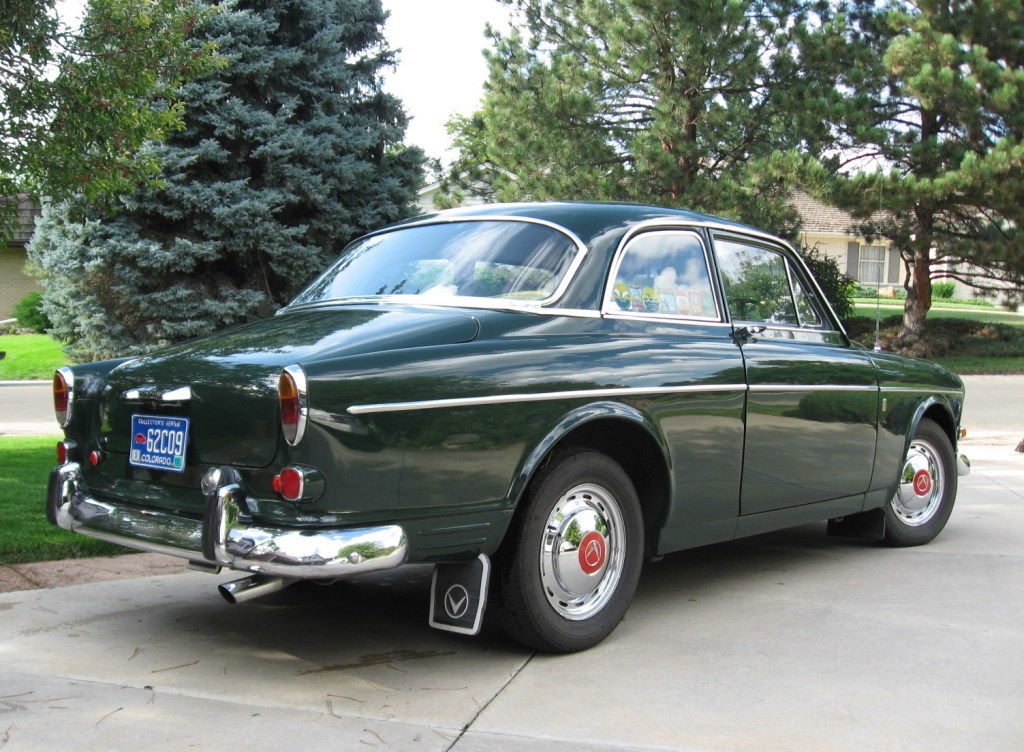
Nonetheless, in those days where American V-8 muscle was virtually unknown in South Africa, the Volvo’s 0-60 sprint of 13.1 seconds at sea level was considered very respectable. Handling-wise, the two cars were on a par, being well-planted through the twisties. The Volvo’s reputation for bullet-proof reliability won out, thus it became my first car. So, on August 30, 1967, I took delivery of a British Racing Green Amazon from Lawson Motors, a Volvo dealership in Johannesburg.
South Africa was the first country to begin Volvo assembly outside of Sweden. This assembly agreement was of mutual benefit as it reduced import duties, while simultaneously freeing up needed production capacity in Sweden. Volvo Amazon manufacture at the Motor Assemblies Limited plant outside Durban started early in 1961 and ran through 1970. Production then focused on the 144 and 164 models, but they never achieved the same following as the Amazon.
Production of the Volvo Amazon at Sweden’s Torslanda plant ceased on July 3, 1970, following which residual components were shipped to South Africa to run out Amazon production. Consequently, the last Volvo 122s ever manufactured in the world were not produced in Sweden but came off the South African assembly line on December 18, 1970, as 1971 models.
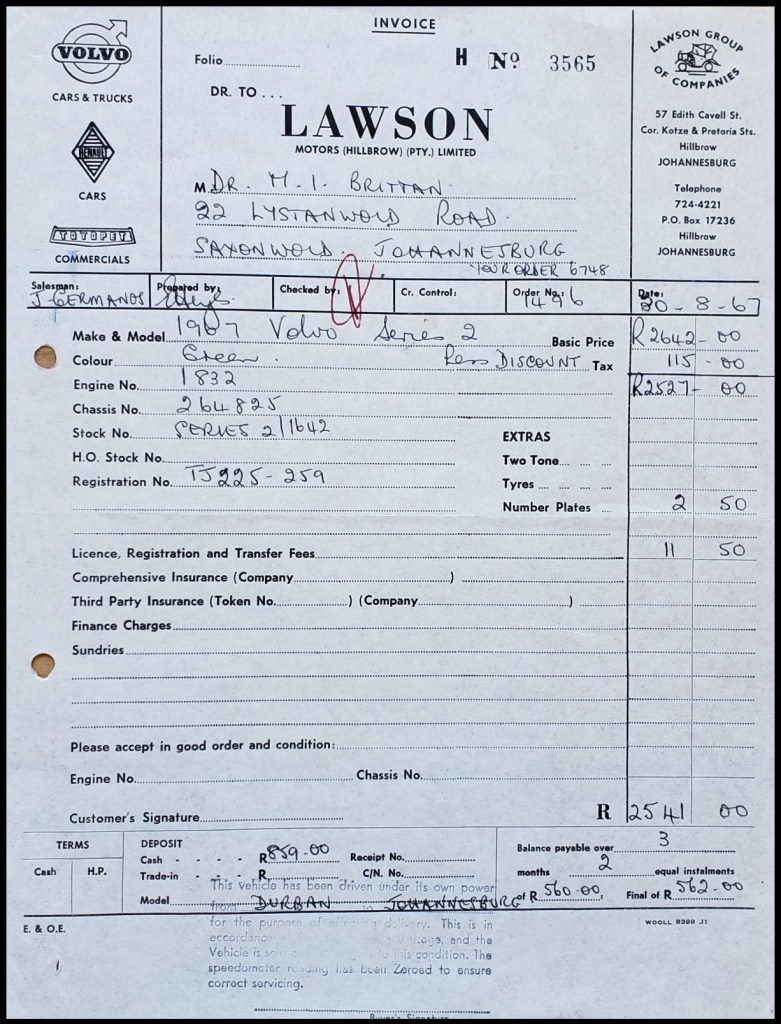
By law, South African car manufacturers (as opposed to importers) were required to progressively increase the local content of all vehicles produced in South Africa; therefore, South African Volvos included a substantial percentage of locally produced stampings, glass, wheels, electrical components, upholstery and other items. Paint colors were also prescribed by the Motor Assemblies Limited plant and local paint suppliers.
The net result of local manufacturing was that the South African Amazons had their own unique product specifications. This makes them quite rare in the Amazon fraternity, more so in that few have survived, let alone being one-owner, in essentially original condition, and located in the U.S. to boot.
Within days of taking delivery of the car in 1967, I set out touring in southern Africa. We travelled through five countries, with the Volvo taking us to such far flung outposts as Cape Agulhas, which is the most southerly point on the African continent, the Skeleton Coast of Namibia (requiring crossing the Namib Desert), the Kalahari Desert of Botswana and the mountain fastnesses of the Kingdoms of Swaziland and Lesotho.

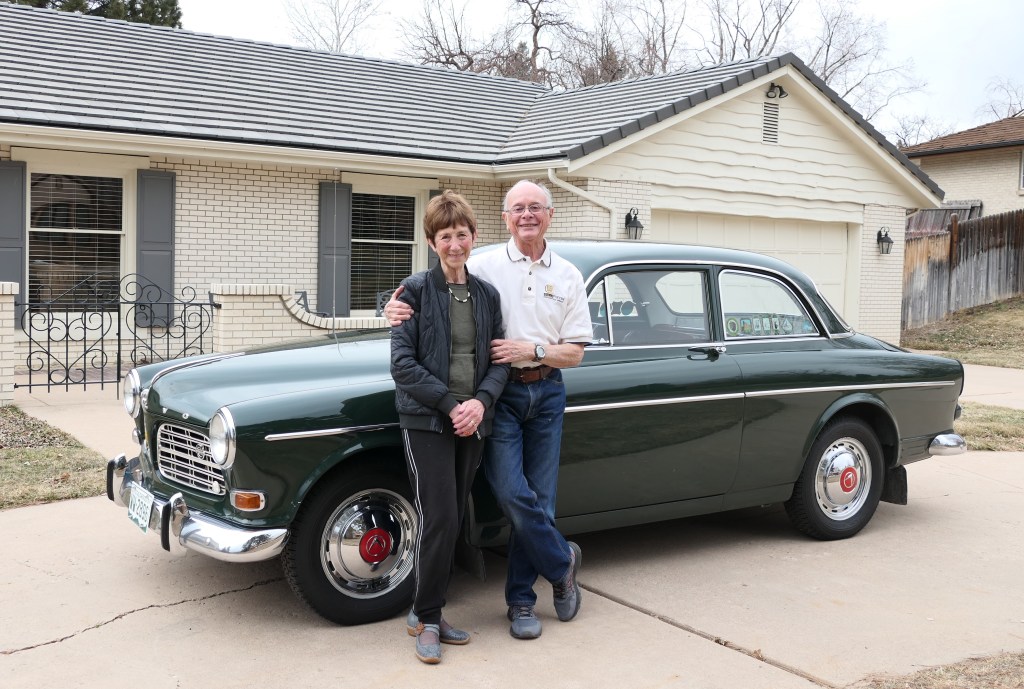
The Volvo had now become an integral part of family lore. Apart from all the travels, it had been used at my wedding to Elizabeth in Johannesburg in 1968, and then, years later, at the weddings of our two children in Denver, Colorado.
As the years rolled by, and with the blandness of newer cars progressively insulated from the feel of the road, the Volvo would become the touchstone of a lost driving art – the lack of power steering, the high-revving engine and the stick shift all contribute to the joys of reliving driving sensations of old.
My Volvo was shipped to the United States in 1986 when my family and I relocated from Johannesburg to Denver, and the wanderlust continued unabated. The Volvo has been used for many car club events and tours throughout Colorado and New Mexico, often with grandchildren in tow. So, the next generation has now shared in the family Amazon tradition.
A common question I get asked relates to the imagined difficulty of driving a RHD car in the United States. I tell them, “If the U.S. Postal Service can do it, anyone can.”

Now, 57 years after acquiring the Volvo, the timelessness of its design and the car’s absolute reliability have certainly vindicated my original choice. Apart from tires, battery and a new fuel pump, the only major replacement was a clutch at 106,666 miles. At the same time, I decided to recondition the engine since the oil consumption increased.
The car was repainted to its original factory British Racing Green color with a baked enamel finish in 1985 prior to being shipped to the U.S., but otherwise it is all original. There was nary a thought of parting with my Volvo, even when faced with the complexities of emigration. The bond with the car stands firm. Being a third car, used only for special outings, the Volvo’s miles have accumulated at a leisurely pace; current mileage is 118k. Even after more than half a century of ownership, my Volvo continues as a source of immense driving pleasure coupled with the pride of owning something unique and of rare quality.