What to check and look for when considering a car to buy
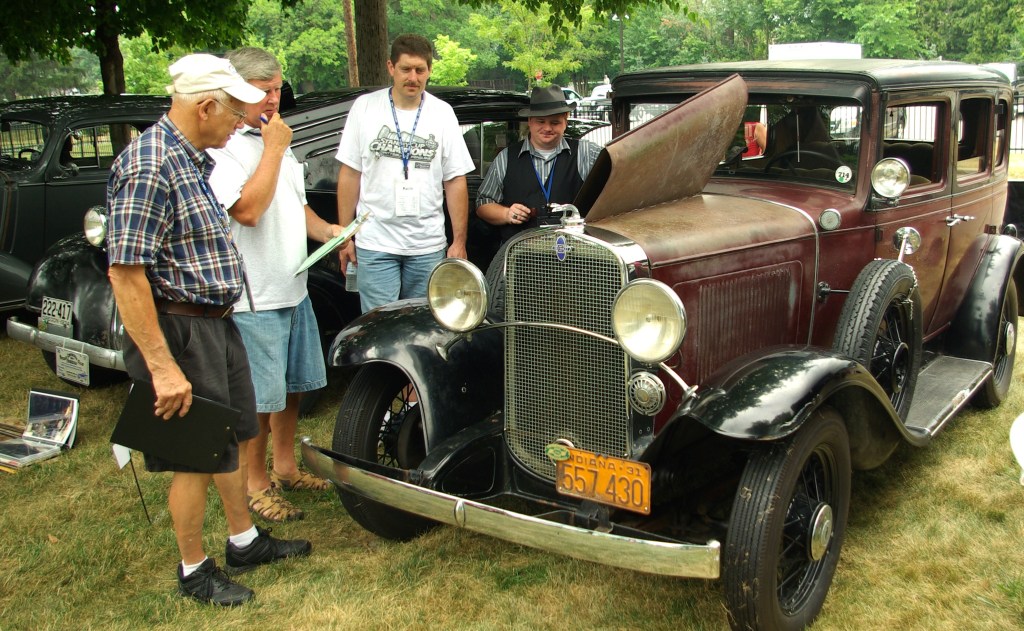
If you want to buy an old car but aren’t knowledgeable enough to know what to look for, don’t worry, it’s not too big a deal. With a bit of insight, you will be able to purchase the car of your dreams without getting taken for a ride.
Sadly, all too often enthusiasts buy cars that are not representative of the condition that sellers say they are in, which is why you need to inspect closely the car you intend to buy before any money changes hands. Discovering problems before you buy will permit you to renegotiate the price or walk away.
If you don’t feel comfortable enough to assess a car’s condition, consider hiring a licensed appraiser to give the vehicle a thorough inspection. The several hundred-dollar fee you’ll be charged just may be the best money you will ever spend buying a car, especially if it will save you the trouble and expense of buying a dolled-up piece of junk that may be worthless.
But if you’re the type of enthusiast who would rather do the pre-purchase inspection yourself here are a few things you can do to avoid any possibility of buying a lemon.
A few days before you go to look at the car call the seller and tell him not to start or use the car for at least one full day prior to your arrival. This will allow you to experience firsthand just how well the engine starts when it’s cold, thus revealing any carburetor and/or choke troubles. You will also be able to see just how well the transmission shifts when it too isn’t fully warmed up. And don’t forget to check the oil for any noticeable contaminants that have risen to the surface of the pan while the car sat idle overnight.
When you test drive the car, during acceleration look in the rearview mirror for any signs of blue smoke, as this usually means the piston rings are worn. Valve guides that are worn also cause blue smoke, which leads to excessive oil consumption. If you see white smoke, that indicates the cylinder head gasket is shot and must be replaced; the worst-case scenario would be a cracked cylinder head. If so, check the oil. If it’s of a milky white consistency, then water is getting into the oil, which is proof that either a cylinder head is cracked, or a head gasket has split.
While the car’s mechanical condition is important, especially if it’s a drive-it-now purchase that isn’t a restoration project, most mechanical issues, aside from a major engine or transmission rebuild, can usually be easily corrected without spending a fortune. It’s the condition of the car’s body that should be your primary concern.
Before you start looking at the body up close, stand back about twenty feet and slowly walk around the car. You’ll be amazed as to what you’ll see from standing back at a distance. Take note on how reflections appear down the side of the car’s body; if reflections are wavy or distorted then that’s the sign that major bodywork (bad bodywork, that is) had been performed. Check all the door and panel gaps for uniform spacing and note how well the doors appear when closed. If they protrude from the bottom, or if they don’t align with the adjoining panels then something’s amiss. And do the doors sag when first opened?
Inspect closely the top of the rear quarter panels. Mainly on muscle cars, where reproduction quarter panels are readily available, these panels are many times put on incorrectly. Inexperienced bodymen will sometimes use rivets to bond the panels on, then cover the rivets with a thick layer of body filler. Worse still, I’ve seen replacement quarter panels that had been installed on top of the old panels. A quick look from inside the trunk will reveal how the quarter panels were really installed. If this is the case with the car you’re looking to buy, either have the seller take off several thousand dollars (because that’s how much it’s going to cost you to redo the installation) or find another car to buy. It’s poorly done bodywork such as this that can render a car almost worthless.
Look closely at the exterior paint finish and inspect it for crazing (small cracks), bubbles or sanding marks, all of which are signs of poor preparation. And where the painted surface meets the trim and windshield surround look for signs of overspray – another tell-tale sign of sloppy painting and preparation. Most importantly, never, never, never buy a car in the dark or while it’s raining. The lack of light and a coating of water will mask nearly all noticeable problems.
Unequaled door gaps are a sure sign of either serious body corrosion or prior crash damage. This is especially true for convertibles, as a weak body structure that is beginning to bend will show a narrow door gap at the top of the door, with a wider gap at the bottom. Not good.
While inspecting a car up close is common practice, also inspect the car from 20 feet away. By doing so, you’ll be able to see if the car is sitting lopsided, which is a sure sign of a worn suspension or perhaps broken springs. From this vantage point you will be able to look down the side of the body and spot any poor body work or body filler, because if the reflections in the paint are all wavy then something isn’t right. And if the chrome on the trim is badly tarnished and pitted and has a rusty patina about it, keep in mind that having those parts re-plated with new chrome will be quite an expense.
Check the car’s undercarriage. If it has a separate frame, check to see if the frame is rotted or has been patched, or worse, if it’s twisted and bent which means prior accident damage. Push up on the floor pans to see if they are solid or weak. From the inside of the car, pull back the carpets to see if the floor has been patched. Any botched repair is a problem that will need to be addressed, such as riveted-on sheet metal.
On many cars, especially muscle cars, the VIN tag and body tag will tell you if the car you’re looking at is in fact authentic. These tags state the engine and transmission the car was originally built with, along with all the original options, and even its exterior color. And depending on the make and model, you will also be able to tell if the engine is a matching-numbers drivetrain. In the world of Corvettes, this is very important to purists.
The other important issue is the car’s title. Does it have one? If not, check with your local department of motor vehicles because depending on the year of the car in question, a title may not be required.
If you don’t have the means to hire a professional appraiser, then have an expert who knows that model car inspects it for you. Before you buy the car, it would be in your best interest to join the associate car club. Someone in the club is bound to be knowledgeable about the model car you’re considering buying and will either give you tips on what to watch out for or assist you inspecting it. Car clubs and their members are an invaluable resource, so take advantage of their good nature and expertise.
Whatever you do, don’t be smitten by shiny paint and tires. It’s what underneath that counts.